Top tips for writing personalised vows

Somewhere between paying the venue balance and wrangling the seating chart, you’ll probably find yourself googling how to write wedding vows. (Hello, welcome, you’re in the right place.)
This is often when it all sinks in: you’ll be standing in front of everyone you love, saying something heartfelt, out loud, while your nan dabs her eyes in the second row.
Deep breath. As a celebrant, I’ve stood beside hundreds of couples as they said their vows, and this part is far more doable than the blank page suggests. Start a note on your phone early in planning, answer three questions about your partner and your relationship, then shape your answers into one to two minutes of words you’d happily say out loud. Your everyday voice is all you need.
Whether yours lean funny, sentimental or a bit of both, here’s how long they should be, how to start, where to find examples worth borrowing from, and what Australian law asks of you on the day.
Table of contents
- How long should wedding vows be?
- Start a vows note the day you start planning
- How to start writing your wedding vows
- Should you write your vows together or separately?
- How to make your vows sound like you
- Where to find wedding vow examples (and how to use them)
- Can you use AI to help write your wedding vows?
- Do you have to say traditional vows in Australia?
- How your celebrant can help with your vows
- Tips for reading your vows on the day
- Vow writing FAQs

How long should wedding vows be?
Aim for one to two minutes each, which is roughly 150 to 300 words. Read aloud at a natural pace, with room to breathe (and the odd happy tear), 150 words takes just over a minute and 300 words a little over two.
That’s long enough to say something meaningful, and short enough that your guests are still hanging on every word. Agree on a rough word count together early on. It takes the pressure off, and saves one of you arriving with three pages while the other brings a post-it note.
Your vows can still differ in length. If one of you could talk underwater and the other is a person of few (well-chosen) words, vows that reflect that will feel true to you both, and your guests will recognise you in them. A friend or your celebrant can read both sets and check they sit comfortably side by side.
The quickest length check: read your vows aloud with a timer running. (The drive to work counts.)

Start a vows note the day you start planning
The best time to start your vows is months before you sit down to write them, so this is the first thing I suggest to the couples I marry.
Even if you’re still months out from the wedding, start a note in your phone. Whenever your partner does something you love, jot it down. If you find yourself thinking about something in your lives you want to always be there in the future, jot that down too. When you come to start writing your vows, half the job will be done for you.
Over a few months, that note fills up with the details that make vows land: the way you always have your morning coffee together, the joke only the two of you get, the moment you knew. When it’s time to write, you’ll open a list instead of a blank page, and future you will be very grateful.

How to start writing your wedding vows
Start with the three questions I give my couples, and answer them in messy bullet points (typos welcome). The polishing can wait.
- What is it about your partner that you really love?
- What makes this relationship so special that you want to be married?
- What parts of you do you want to bring to the marriage? Think about the promises that feel important, and the ones you know you can honour.
Your answers to these three questions are the bones of your vows. Some couples keep each answer as its own paragraph. For others, the answers flow together, like this example: “I love how motivated and creative you are, and I promise to always give you space to grow and the security to flourish.”
Still staring at a blinking cursor? Try writing around one of these themes:
- A story from your relationship
- How your partner makes your life better
- Your past, your present and your hopes for the future
- What marriage means to you

Should you write your vows together or separately?
Either works, and it’s your call whether the words stay a surprise until the ceremony. Before you start, pour a glass of something nice or grab your favourite treat, sit down together and agree on three things:
- Tone: light-hearted, sentimental, or a mix
- Focus: promises, what you love about each other, or both
- Length: a rough word count you’ll both aim for
With those settled, your vows will match in spirit on the day, even if neither of you has heard the other’s. It also means nobody delivers a tender three-minute love letter straight after a sixty-second stand-up set. You can write and share the same vows, or write your own. If you’re keeping them a surprise, ask your celebrant or a trusted friend to read both sets and check the tone and length work together.
“I am a big fan of starting your vow writing as a date night activity. If you enjoyed answering the questionnaire for your ceremony, you may also love chatting through vow examples and discussing which vows resonate most with you both. It also gives you a chance to get a sense check on what the other is thinking and what matters most to you both in your relationship.
I always chat to couples about how we have often never sat down and talked about which values and themes matter most to us in our relationship; it’s often implicit and shown but never really discussed – intentionally doing so in the lead-up to your wedding can be a great chance to reflect on what matters most to you both.
Bonus points – you’ll highlight so many things and feel really proud of what you have created together. Then it’s a case of: out of all these things that matter to us, what do I want to focus on? Blank page fever absolutely gone!”

How to make your vows sound like you
In my experience, what guests remember is how genuine your vows were, how it felt to hear you make those promises, and how much they sounded like you. So write the way you speak.
Don’t make promises you can’t keep! Keep them real for you, and achievable.
If you’re a couple who thrives on a bit of banter, leave it in.
If you’re expressive and love a bit of PDA in your everyday life, don’t shy away from that in your vows. This is the place to let that love show!
Keep humour affectionate. A gentle dig about who hogs the doona will get a laugh; but keep it sensitive. Light-hearted vows are at their best when they finish on what you love about each other and the life you’re building.
Where to find wedding vow examples (and how to use them)
Reading examples is a great way to work out what you like (and what makes you cringe a little). Your celebrant may have a resource kit to share, and recently married friends are usually delighted to be asked what they included in theirs. When a line resonates, borrow it, then rewrite it with your own details and promises so it sounds like you.
A simple structure helps, too. This shape is a reliable starting point:
- Your partner’s name and what today means to you
- What you love about them
- What your relationship gives you
- Your promises
- A closing line that brings it home
Can you use AI to help write your wedding vows?
Yes, as a brainstorming partner. AI tools such as ChatGPT or Claude can suggest prompts, help you put your thoughts in order, or offer another way to phrase a sentence you’re stuck on.
The heart of your vows (the nickname, the story, the promise only you could make) comes from you. Use the tool to get unstuck, then write the final words yourself. After all, your partner knows exactly how you sound.

Do you have to say traditional vows in Australia?
Every civil marriage ceremony in Australia includes legal vows, and personal vows are optional additions. Under the Marriage Act 1961, each of you says words to the effect of: “I call upon the persons here present to witness that I, [name], take you, [name], to be my lawful wedded wife/husband/spouse.” Your celebrant will guide you through them.
If you’d love to keep things traditional, you can say the legal vows on their own, or add classic vows such as “to have and to hold, from this day forward”, which carry the weight of words spoken for generations. There’s a middle path too: traditional vows with a line or two of your own, or a short promise you repeat after your celebrant, phrase by phrase.
How your celebrant can help with your vows
Writing vows, then reading them in front of everyone you love, is new territory for most people, so lean on your celebrant. Many will share examples, read over drafts, suggest edits, or check that your two sets of vows work together. Some will weave your notes and favourite examples into a first draft, or workshop the words with you in person.
A friend or relative who’ll keep your words confidential makes a good sounding board too.
And if you’re stuck, start anyway. One of our celebrants once told us about a groom who emailed her every few days asking for more examples and ideas. Her advice was simply to start: write down whatever comes into your head, even if it doesn’t flow yet. The next day he emailed to say that once he’d started, the words came easily.
Your vows are one part of a ceremony built around the two of you, and your celebrant is an expert at providing assistance and ensuring your vows will flow with the rest of the ceremony.
“Plan the structure of your vows together
100 words = roughly a minute of talking. 250-300 words is an excellent guide.
Your vows don’t need to be the story of your love, the celebrant will do that.
End your vows with an “I love you”
Ignore all advice and write what’s in your heart. Your vows are a declaration of love, ignore everything else.“
Tips for reading your vows on the day
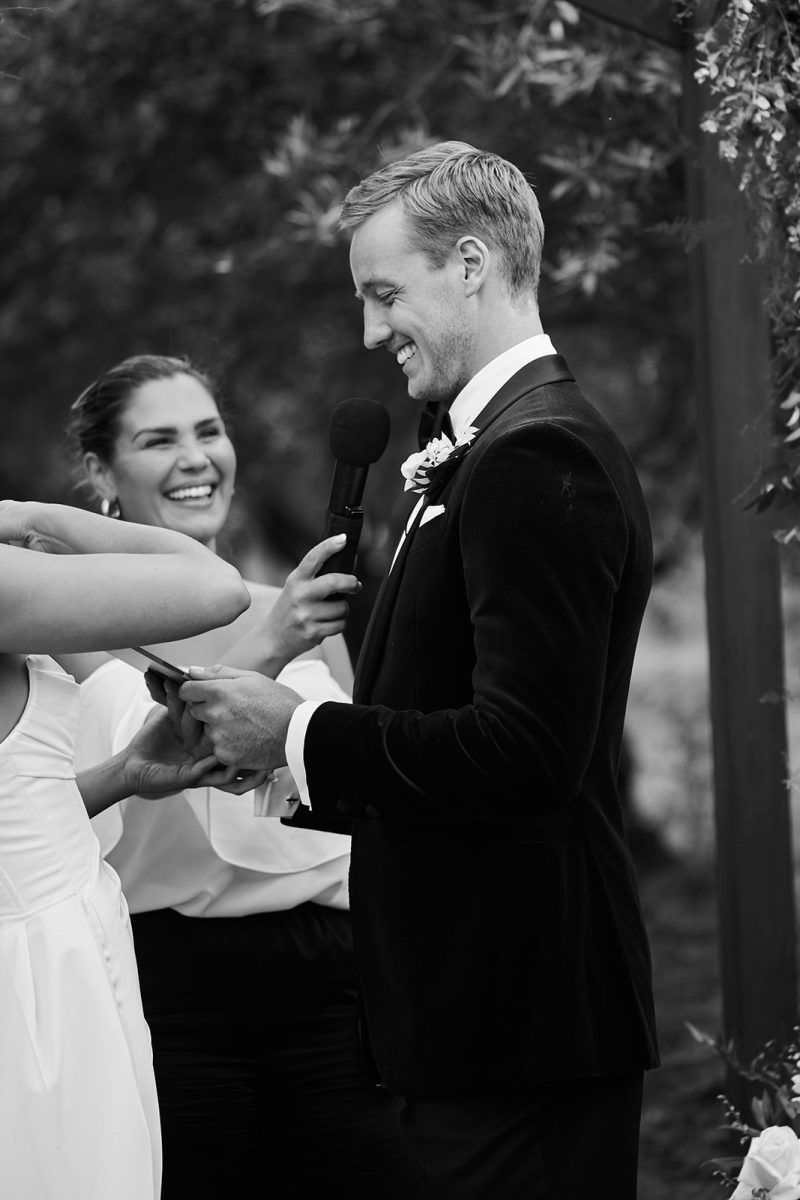
- Practise out loud a few times in the week before. It’s also your best length check.
- Write them on a card or in a vow book or ask your celebrant what they provide, so you have something lovely in your hands (and in your photos).
- If you’re providing your own vow cards, give your celebrant a copy as a backup, in case your card goes walkabout.
- Take your time. Pausing for a breath, a laugh or a happy tear is part of the moment.
Your celebrant looks after more than the words on the day, as Tee from Marry Me Tee can attest:
“I’d taken a couple’s vow booklets home after the ceremony so they didn’t have to carry them around post ceremony – only to get a call while I was halfway home. The groom had tucked his speech inside and suddenly didn’t have it for the reception. I turned the car around and made a beeline straight to the venue to get it back into his hands in time. Smooth operator.”
So if you’ve tucked anything else inside your vow book, give your celebrant a heads-up. (For more behind-the-scenes saves, read how wedding vendors go above and beyond.)
Your vows are a promise said out loud in front of the people who love you most. Write them the way you’d say them, and they’ll sound like you on the day.
Still choosing your celebrant? Read what to consider when booking your celebrant, or browse the celebrants in our directory.
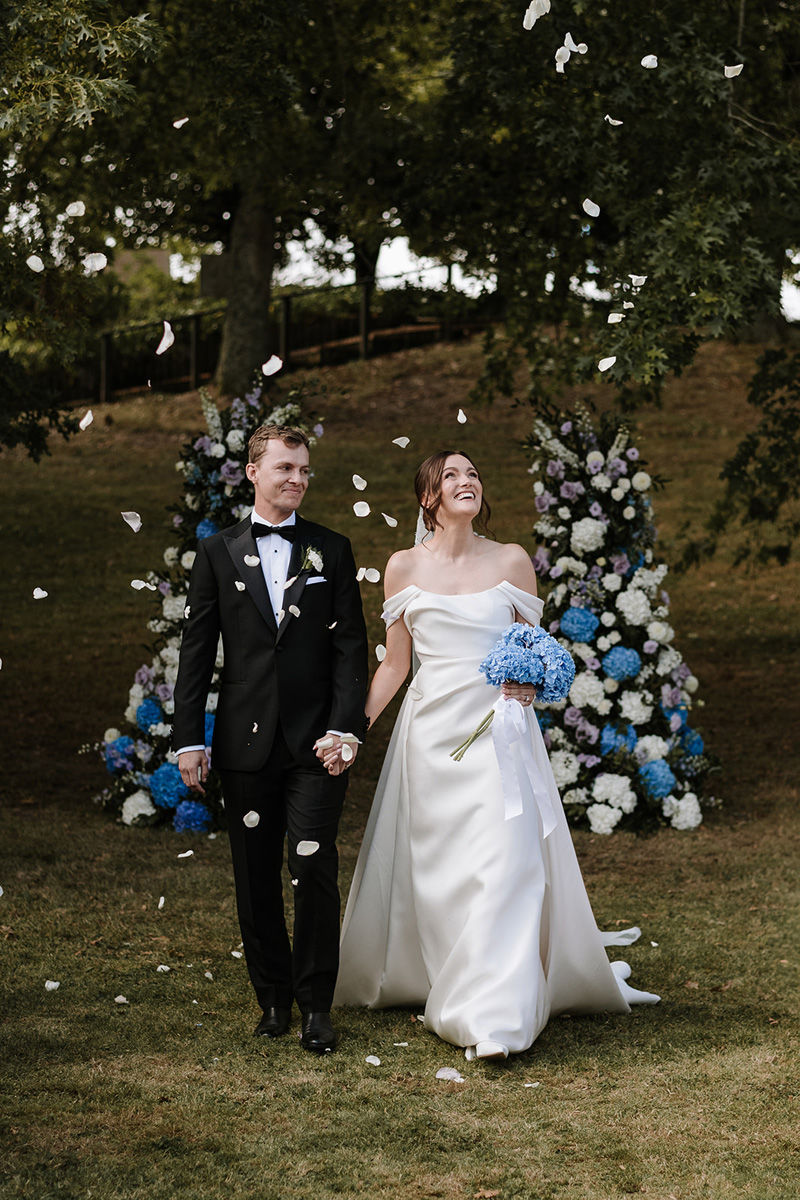
Now your vows are underway, is the rest of your ceremony sorted? From sound to weather plans, The Ceremony Situation covers it from start to finish.
Vow writing FAQs
Aim for one to two minutes each, which is roughly 150 to 300 words. Read your vows aloud with a timer to check, and agree on a rough length with your partner early on.
Start a note on your phone early in planning and jot down the things your partner does that you love. When it’s time to write, answer three questions: what you love about your partner, why you want to marry them, and what you promise to bring to the marriage.
Your vows can differ in length and still sit well together, especially if one of you is a talker and the other a person of few words. Your celebrant or a trusted friend can read both and check the balance.
Personal vows are optional. Under the Marriage Act 1961, each partner says the legal vows, which your celebrant guides you through, and you can add personal vows alongside them.
AI tools can help you brainstorm prompts, structure your thoughts or rephrase a sentence you’re stuck on. Write the final words yourself so the stories and promises sound like you.
While you’re starting that note…
…let us send you more. Join the Ivory Tribe newsletter for real Victorian weddings, ceremony advice and planning guides like this one, twice a month.