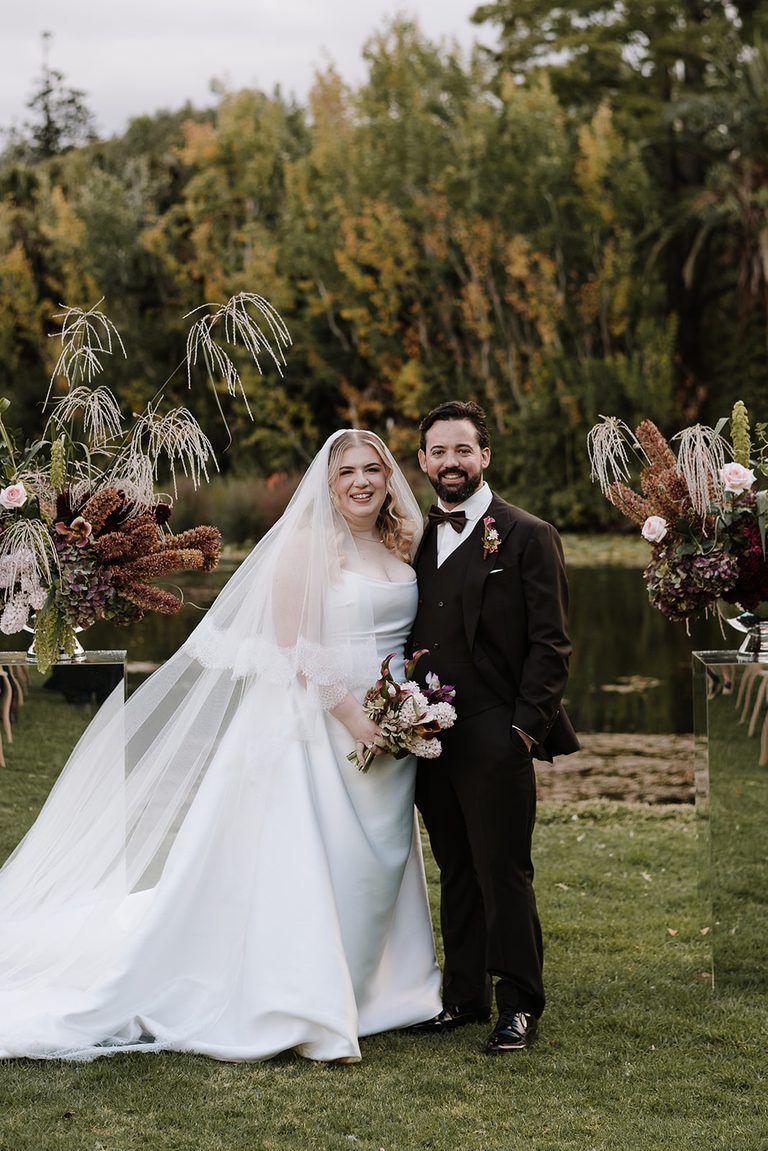
Decoding the dress code: a guide for gents
Estimated reading time: 13 minutes
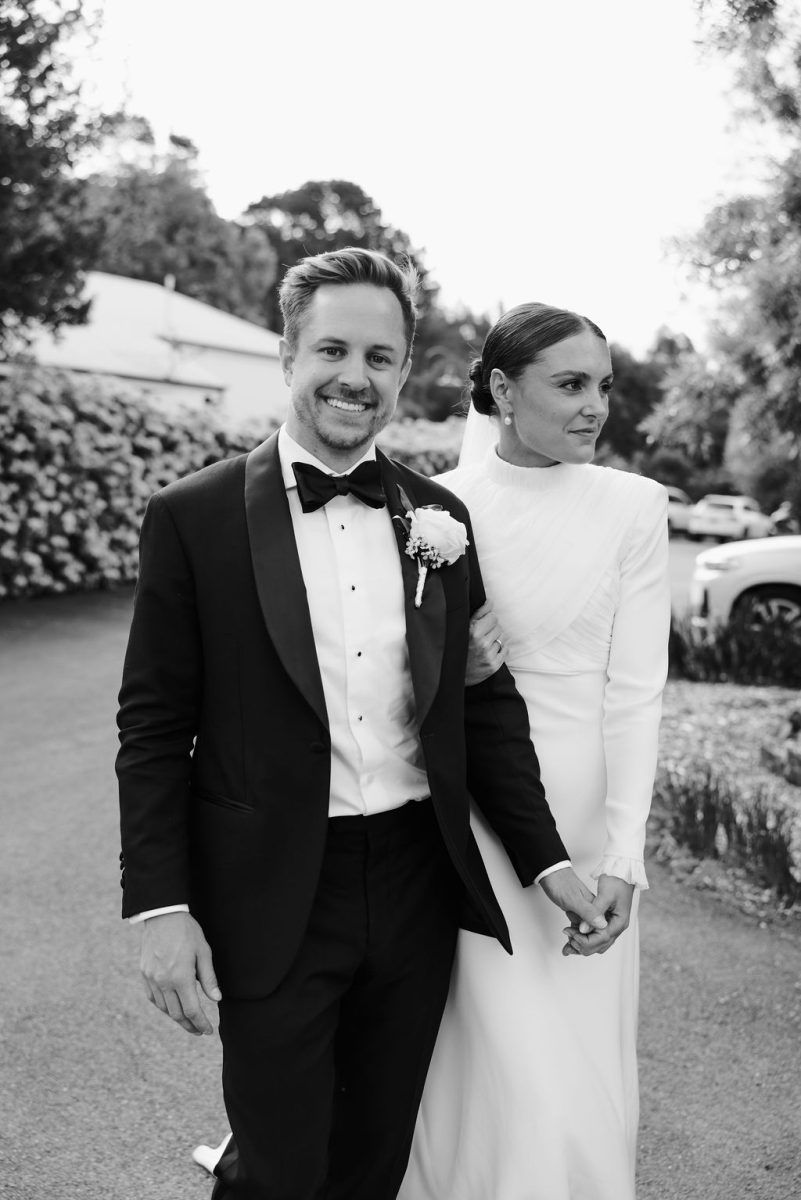
As a celebrant, I stand at the front of ceremonies most weekends, and I can tell you with confidence: the men are having a moment.
The days of grabbing any dark suit from the back of the wardrobe and hoping for the best are well and truly behind us. Grooms are investing in custom tailoring, groomsmen are coordinating with intention, and guests are turning up with a level of thought that makes people watching at weddings a true treat.
But the question I was asked the other day from a friend is one I hear often: “The dress code is black tie. Does my husband have to wear a tux?”
Great question.
Wedding dress codes can be genuinely confusing, and the stakes feel high.
So, we’ve put together a practical guide to dressing for every level of formality, with a few style cues from this year’s Oscars red carpet and our dapper real wedding grooms to show you what these codes look like when they’re done really, really well.
Happy planning!
Chloe
In this article:
Black Tie
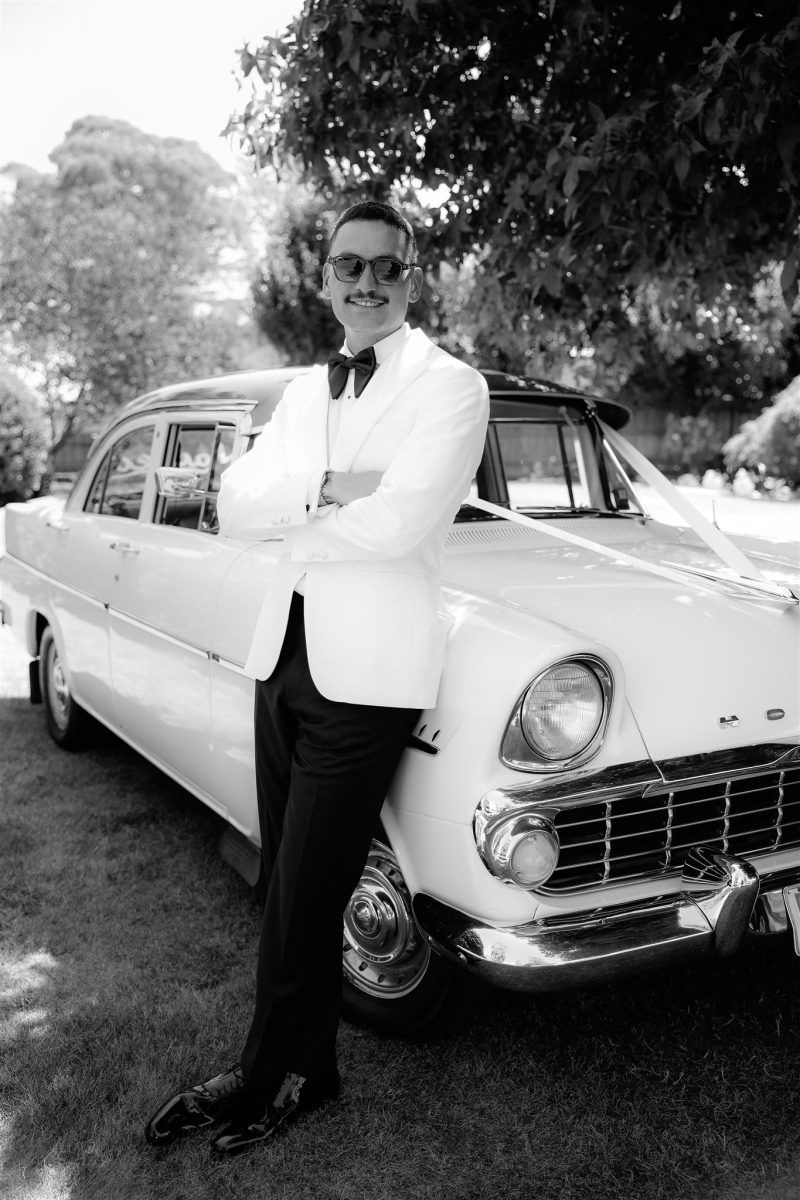

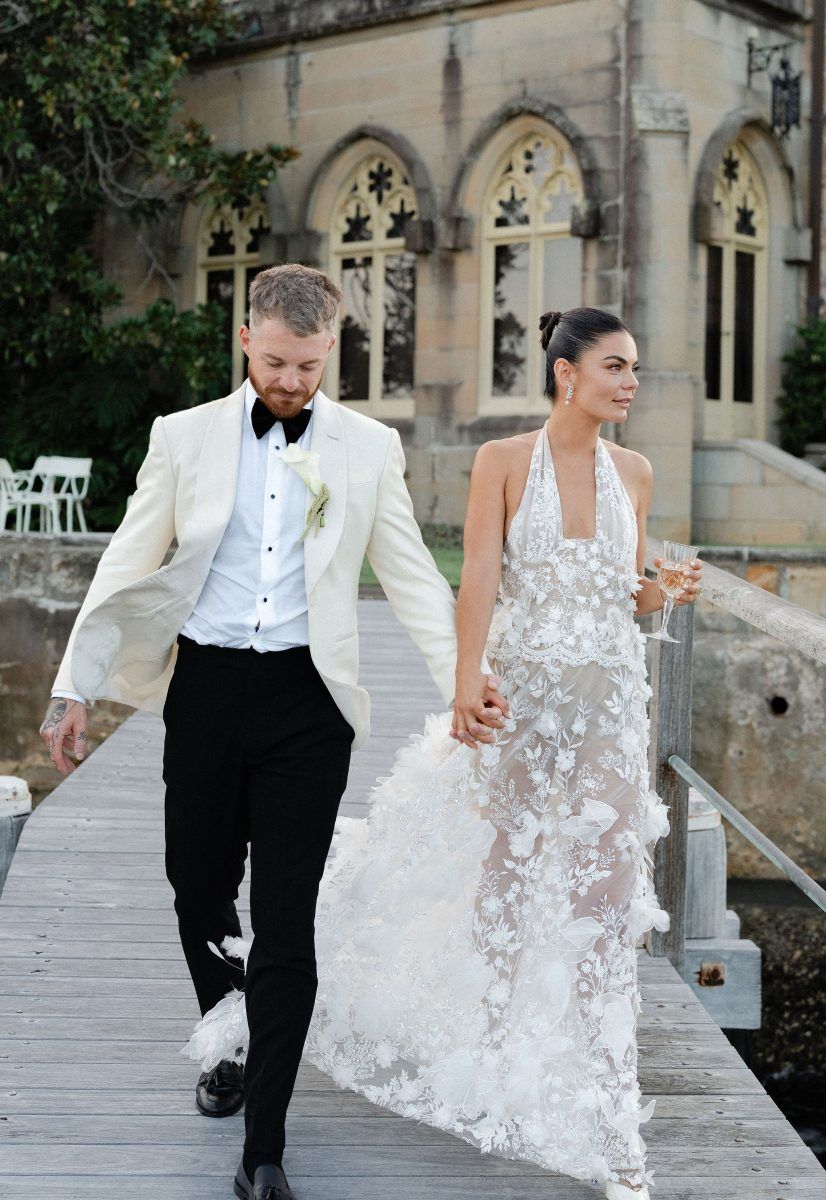
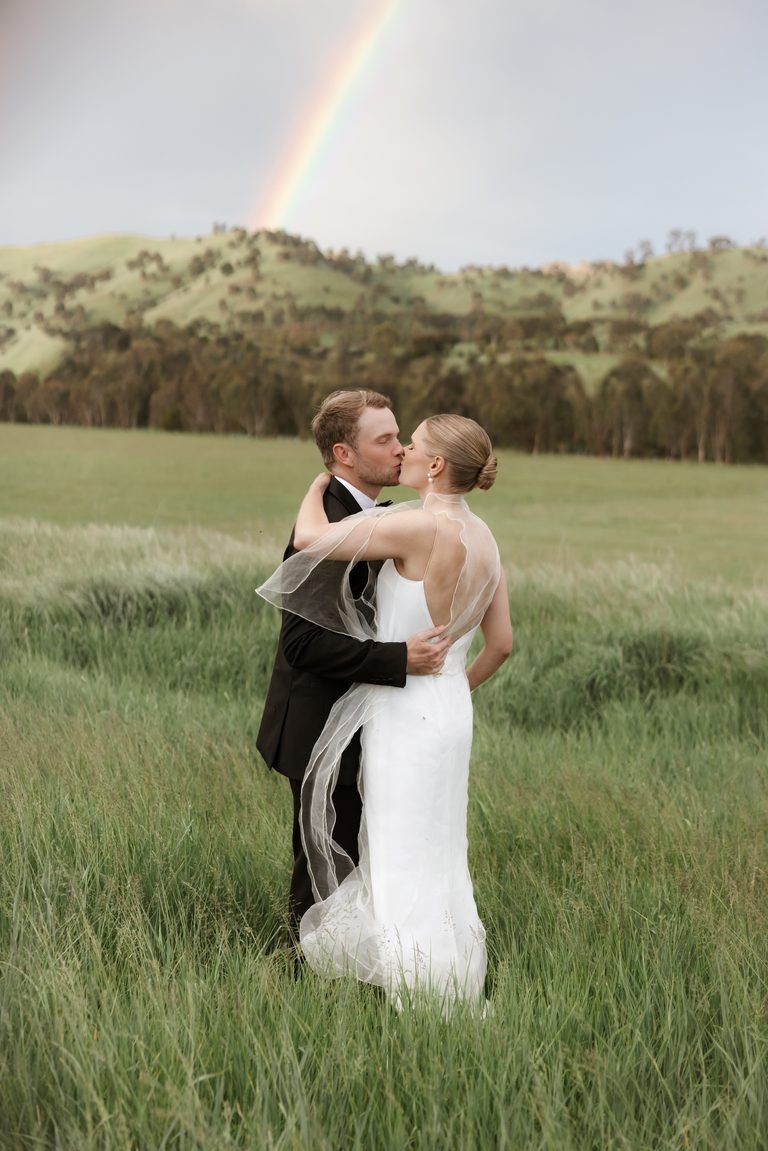
The most formal dress code you’ll encounter at a wedding. Black tie technically means a tuxedo — traditionally in black or midnight navy with satin or grosgrain lapels, a crisp white dress shirt, and a bow tie.
But “traditional” doesn’t have to mean predictable.
The 2026 Oscars red carpet was a masterclass in how to honour black tie while still expressing personality. Timothée Chalamet arrived in an all-white custom Givenchy tuxedo, relying entirely on accessories — sunglasses, rings, a watch — to bring the look to life. Michael B Jordan chose a Nehru-collar Louis Vuitton suit in all black with a gold pocket chain, creating a silhouette that felt both modern and regal. And Benicio Del Toro proved that a perfectly tailored one-button peak lapel in classic black, done properly, still commands a room.
The biggest accessory trend of the night? Brooches. Pedro Pascal wore a statement Chanel bloom, Leonardo DiCaprio paired a Boucheron Bee with his Dior tux, and Channing Tatum pinned a Tiffany piece to his Versace lapel. For grooms and guests alike, a brooch or lapel pin is one of the simplest ways to personalise black tie without breaking any rules.
What to look for: A well-fitted tuxedo in black or midnight navy. Peak or shawl lapel. Satin-covered buttons. Side adjusters rather than belt loops for a cleaner waistline. A crisp white shirt and black bow tie. If you want to add personality, do it through a brooch, your choice of cufflinks, or a subtle detail in the lining.
The InStitchu tip: If you’re investing in a custom tuxedo, consider satin piping on the trousers and a contrast lapel in grosgrain or satin — small details that elevate the entire look.
Unsure of whether you’re expected to commit to the full tuxedo? Don’t be afraid to reach out to the couple to confirm this is the expectation – just do so early on, not in the week leading into the wedding!
Formal / Black Tie Optional
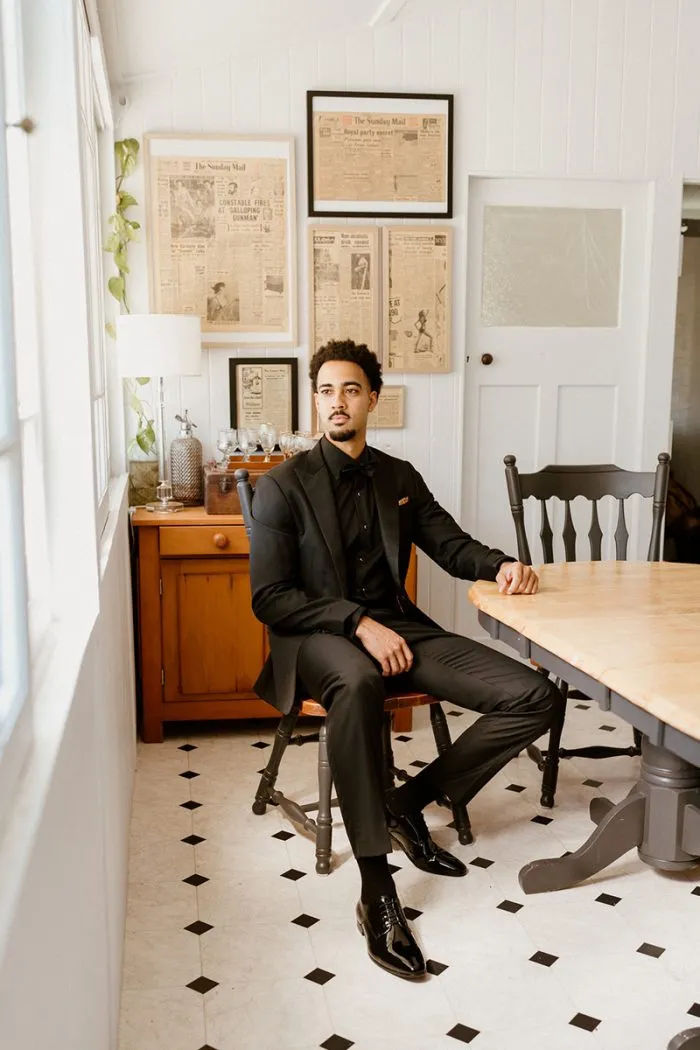
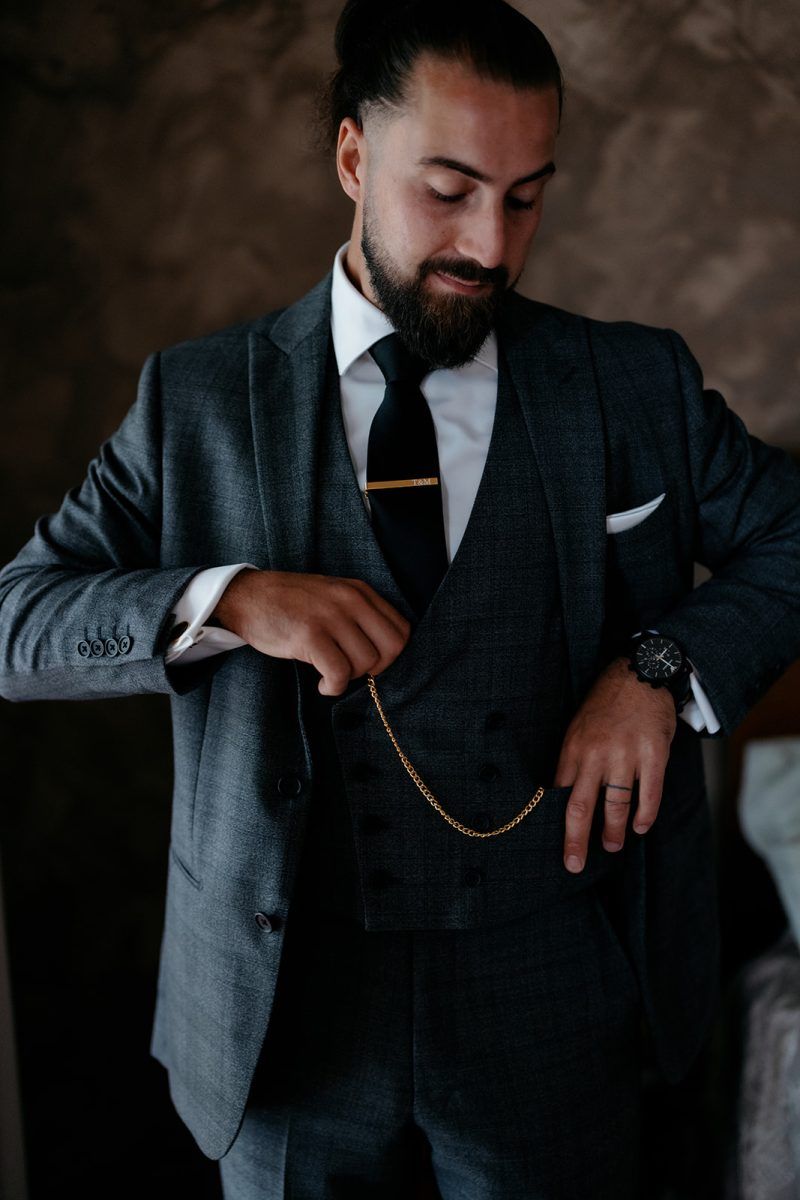
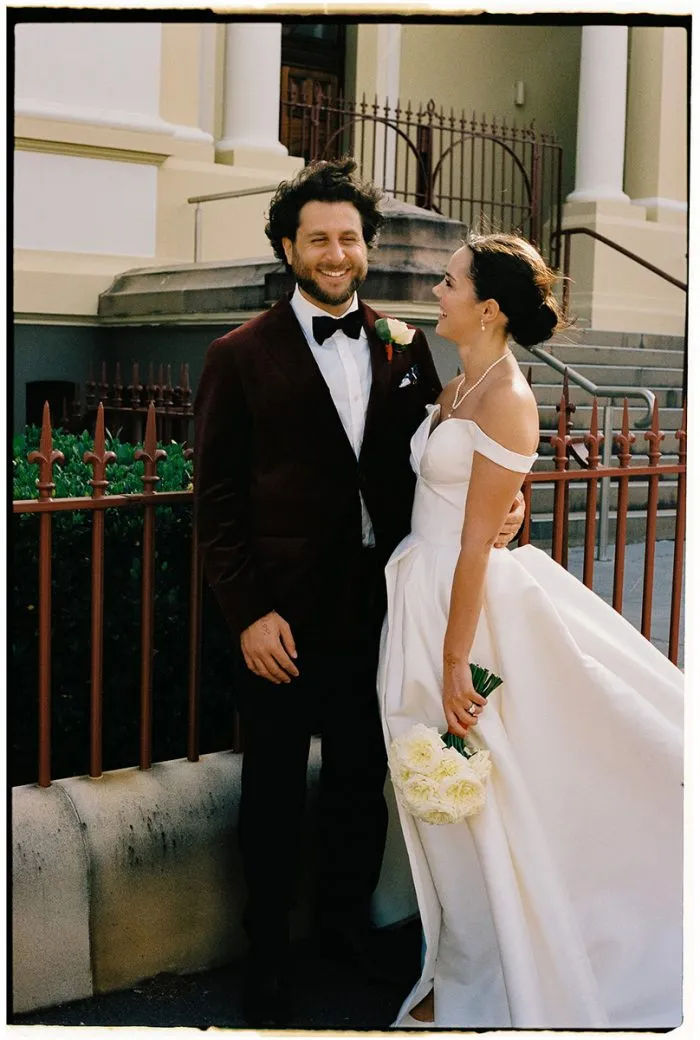
Think of this as black tie with breathing room. The formality is still there, but there’s more scope to play with fabric, colour, and detail. A tuxedo is welcome but not required; a dark, well-cut suit will absolutely hold its own.
At the Oscars, Ryan Coogler’s Louis Vuitton tuxedo was a perfect example. At first glance, it looked like a classic black tux — but the contrast silver button detailing and slim, high-sheen lapel gave it a quiet intentionality that set it apart.
Jesse Plemons went a different direction entirely in a velvet Lardini jacket with a sky-blue shirt and diamond-point bow tie, proving that texture and unexpected colour pairings can be just as impactful as a traditional tux.
What to look for: A dark suit in black, charcoal, or midnight navy. Wool-silk blends add a subtle sheen that reads formal without a full tuxedo. A wide peak lapel or contrasting fabric on the lapel nods to black tie. Pair with a white shirt, a silk tie, and leather oxfords. A matching pocket square and a considered watch complete the look.
For the confident dresser: Velvet jackets in deep emerald, burgundy, or midnight blue are a strong option for evening weddings at this dress code level. Keep everything else simple and let the jacket do the talking.
Cocktail / Semi-Formal
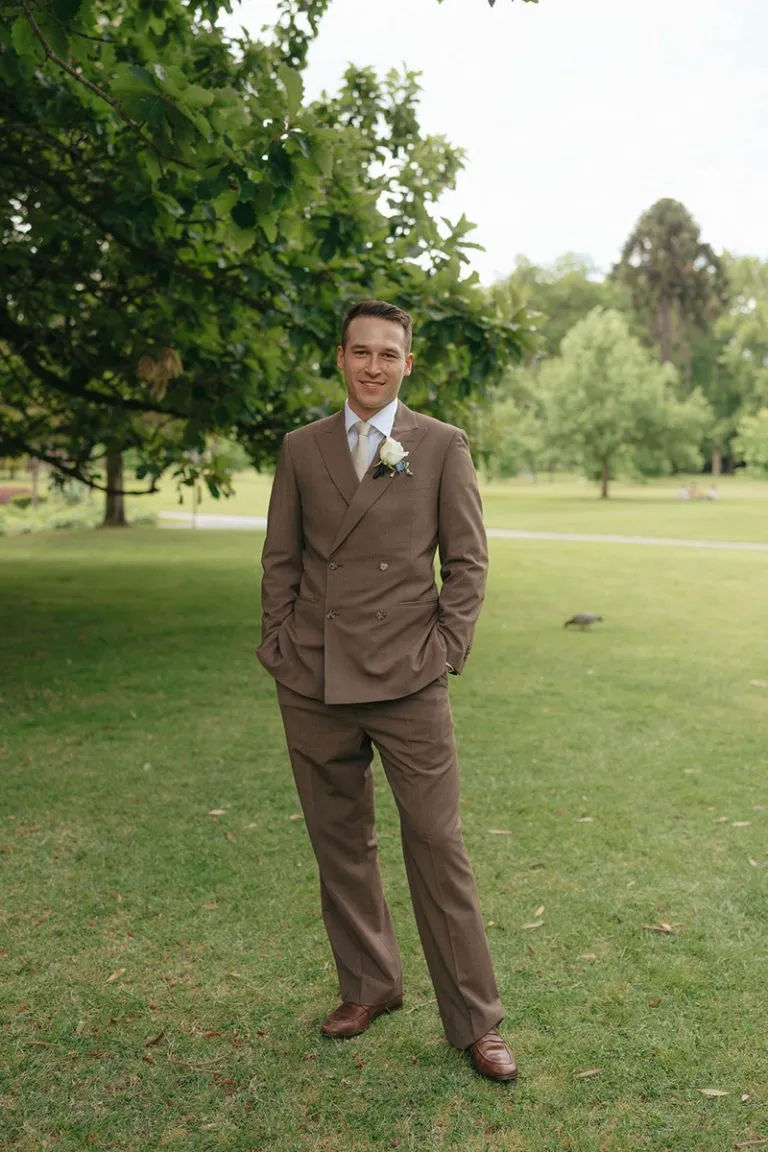
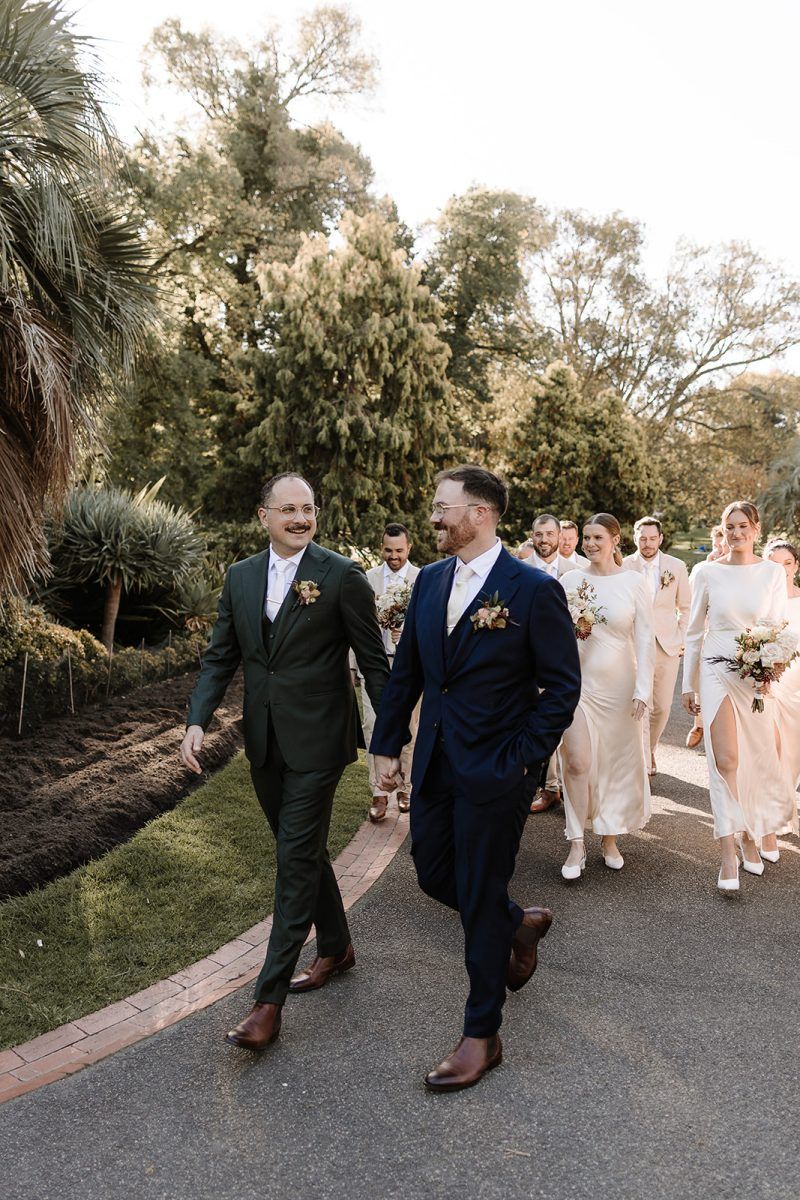
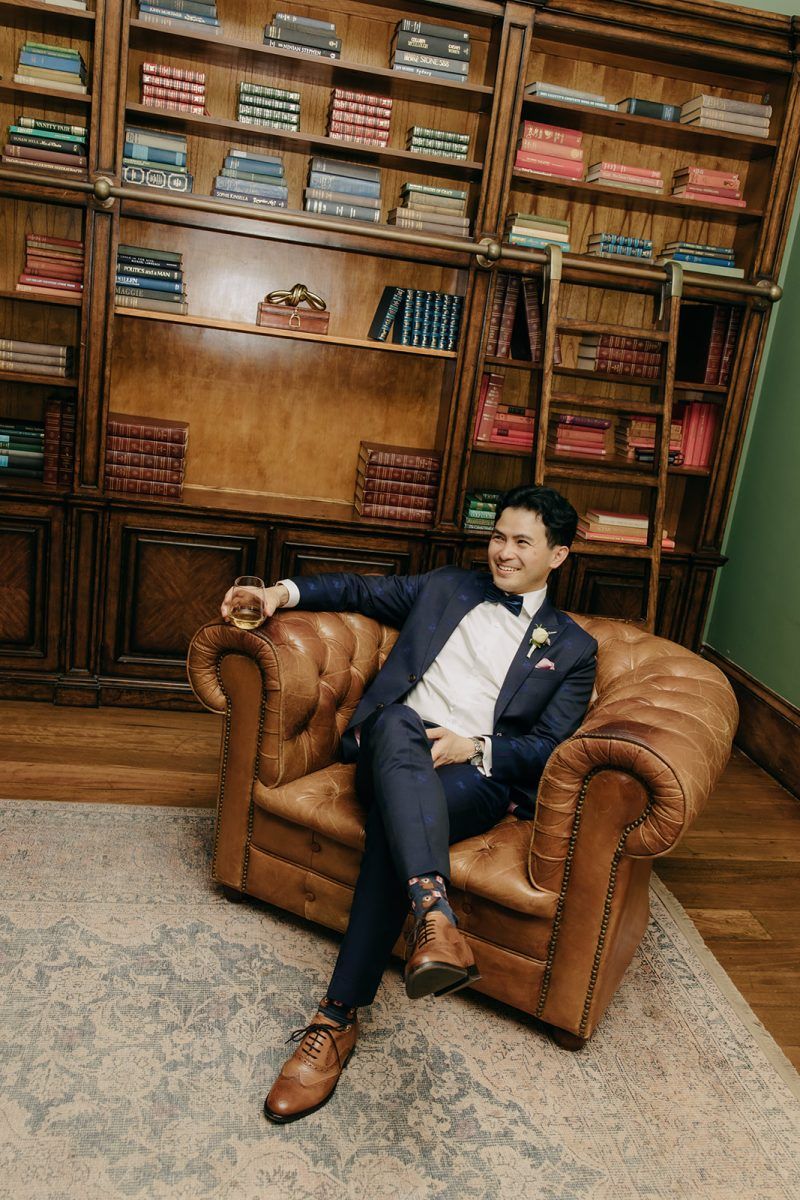
A frequently seen dress code on Australian wedding invitations, and the one with the most room for self-expression.
Cocktail means sharp but relaxed. You’re dressed up, but there’s freedom to show personality through colour, pattern, and proportion.
Paul Mescal’s Oscars look captured this spirit perfectly in a slightly cropped Celine suit with small, folded lapels and a soft, floppy bow tie. It was tailored, polished, and completely his own. Kieran Culkin took a different approach with a rust-coloured Paul Smith jacket featuring satin peak lapels, paired with a black shirt and statement brooch. Both outfits felt considered without being rigid.
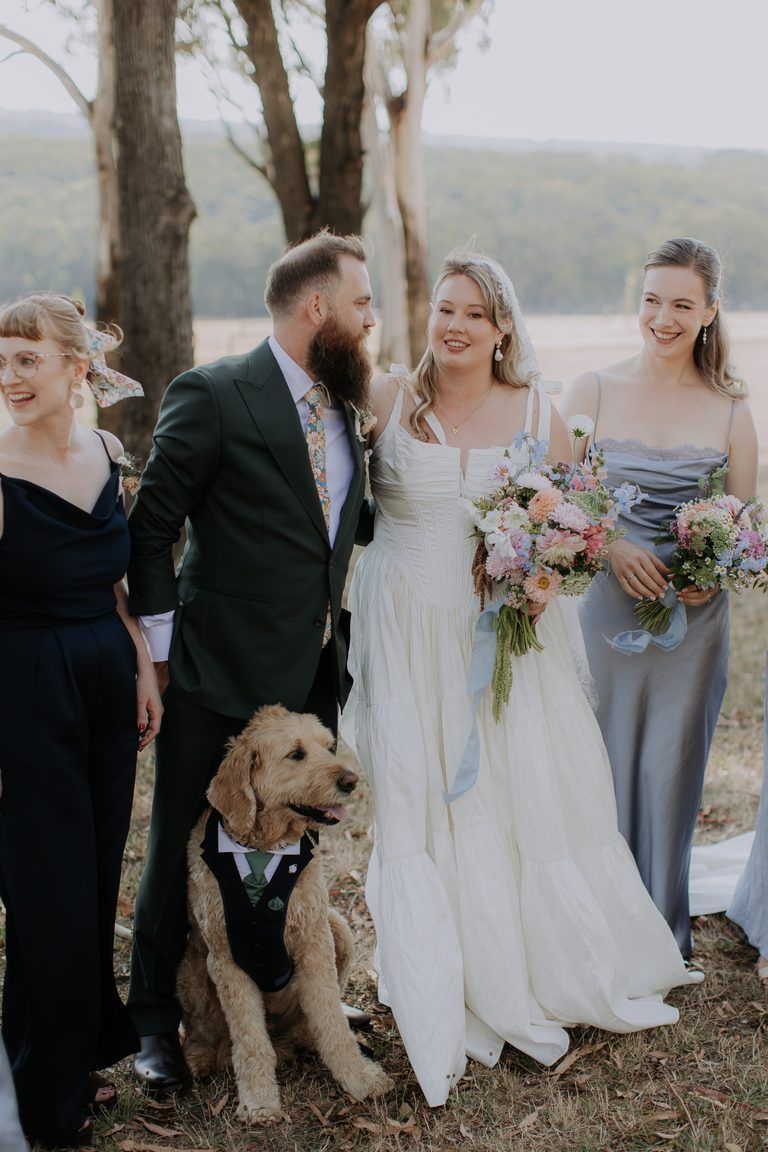
What to look for: A mid-tone suit in navy, grey, or earth tones; think chocolate brown, olive, or warm stone. Two-button jacket with a notch lapel for versatility. Subtle patterns like herringbone, windowpane, or birdseye add depth. A vest can elevate the look, or skip the tie entirely for a modern, open-collar approach.
The trend to try: Contrasting waistcoats are one of the defining moves of 2026 menswear. A navy suit with a champagne waistcoat, or charcoal with burgundy – it adds personality while keeping the overall look cohesive. Let the waistcoat be the statement piece and keep everything else simple.
Smart Casual
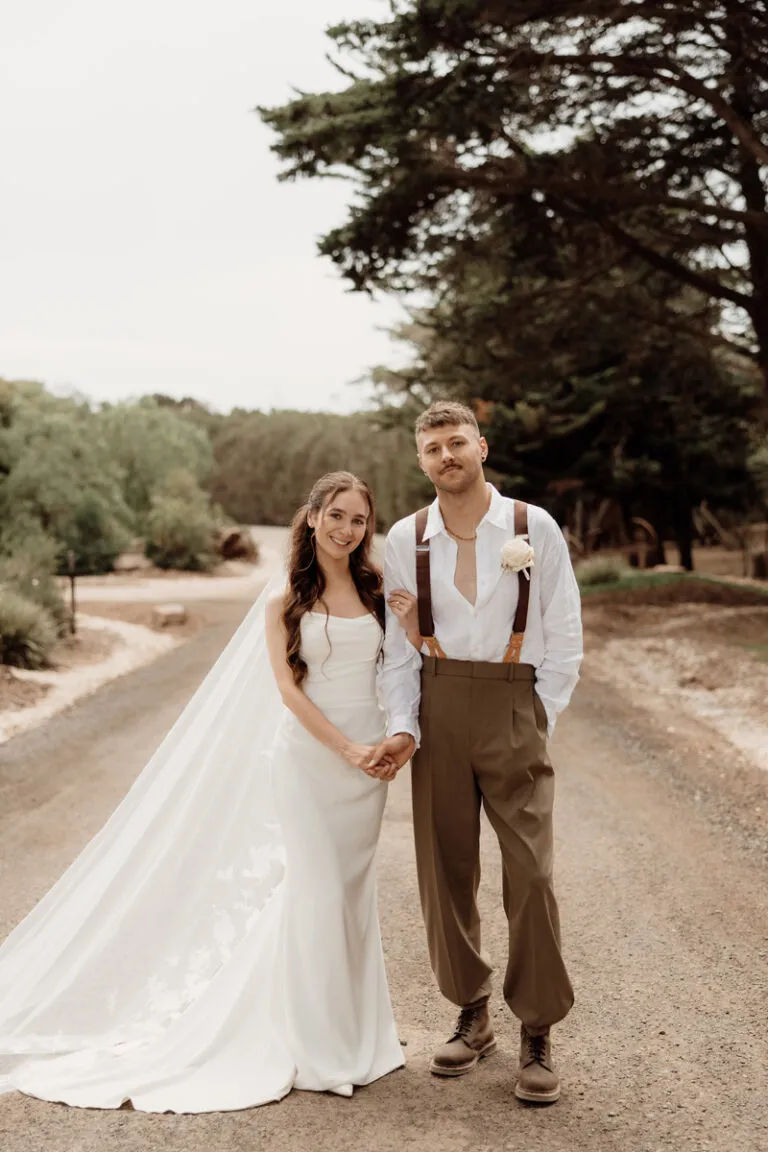
The dress code that strikes fear into the hearts of men everywhere. Smart casual at a wedding is not the same as smart casual at a pub (leave the shorts at home!) but it’s also not a suit.
Think of it as intentional dressing. The effort is in the choices, not the formality.
What to look for: Tailored separates work well here; a textured blazer with chinos or tailored trousers in a complementary (not matching) tone. Earthy and muted palettes feel right: sage green, dusty blue, tan, warm brown. Fabrics with texture, linen, brushed cotton, lightweight tweed, add visual interest. A collared shirt without a tie is the sweet spot. Finish with loafers or clean leather shoes.
Where personality comes in: Accessories matter more at this dress code than any other, because the outfit is simpler. A quality watch, considered shoes, and a pocket square can take smart casual from “I wasn’t sure what to wear” to “he understood the brief perfectly.”
Coastal / Destination
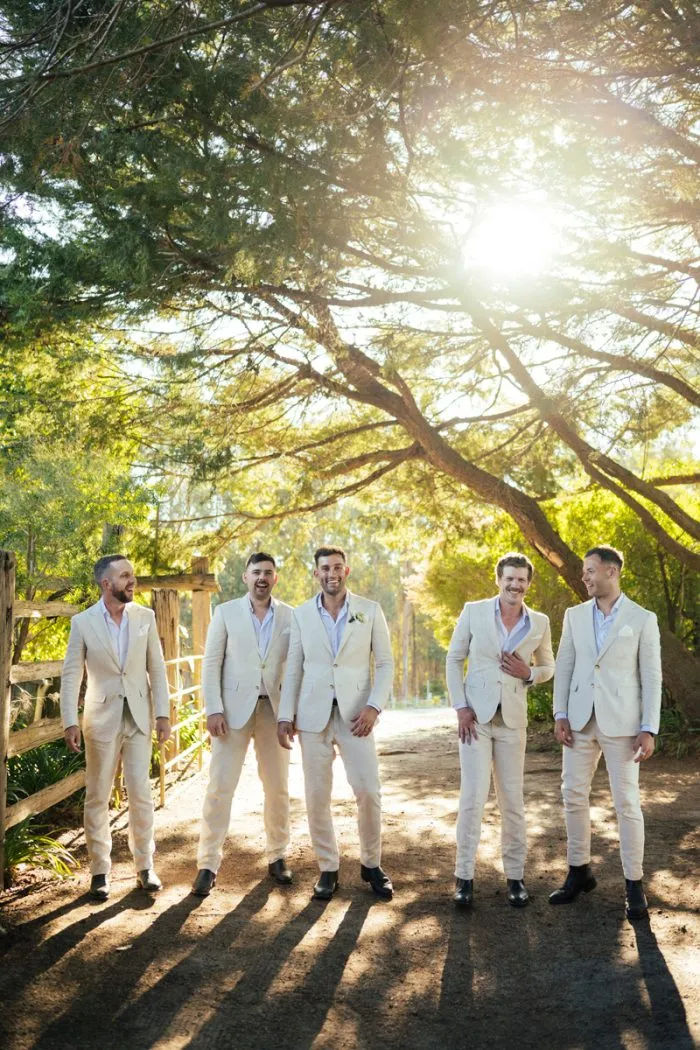

Lightweight, relaxed, and polished — the goal is to look put-together without looking like you’re fighting the weather.
What to look for: A linen, cotton, or lightweight wool-blend suit in beige, ivory, stone, or light blue. Unstructured jackets with soft shoulders and minimal lining work best for breathability. Patch pockets and a relaxed notch lapel keep things casual. An open-collar button-down shirt (no tie) is the right call. Loafers work on grass and sand; skip the heavy leather dress shoes.
A word on linen: Pure linen wrinkles, that’s part of its character, and some grooms lean into it. But if you prefer a cleaner drape, a linen-wool or linen-cotton blend offers the same breathability with more structure. Linen is no longer reserved for beach weddings; it’s showing up at garden parties, vineyard receptions, and semi-formal celebrations across Australia.
2026 style trends for men worth noting.
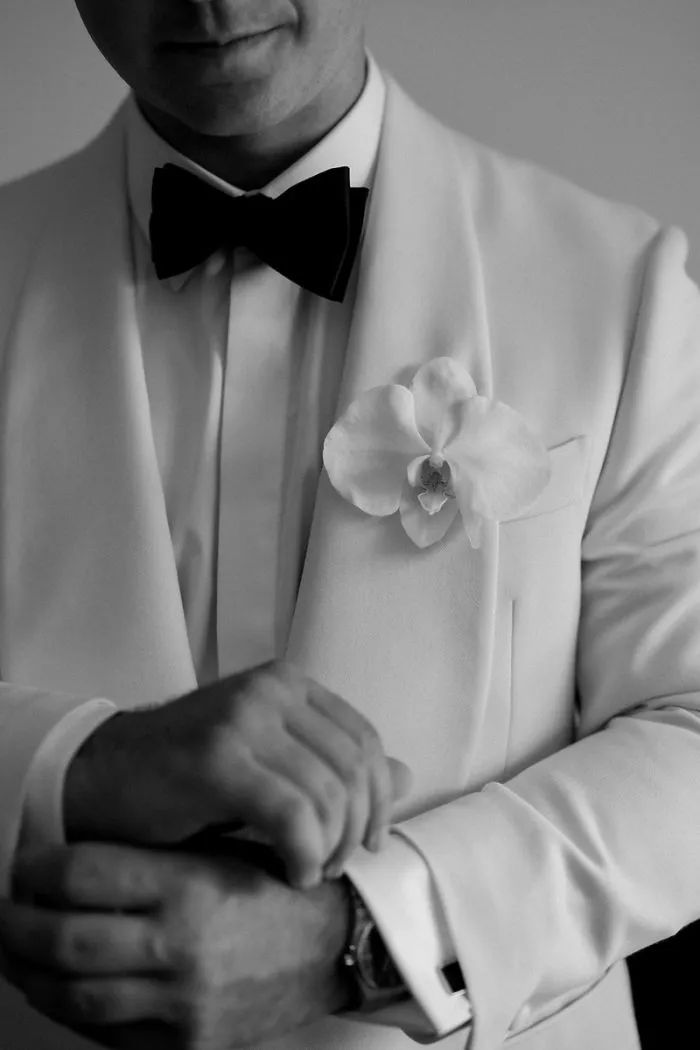
Whether you’re a groom, a groomsman, or a guest, these are the style directions shaping how men are dressing for weddings right now.
Brooches and lapel pins over pocket squares. The Oscars confirmed it, brooches are the accessory of the moment. From simple enamel pins to statement vintage pieces, they add personality to any suit without changing the silhouette.
Velvet and textured fabrics for evening. Velvet dinner jackets in jewel tones, jacquard patterns, and satin finishes are making formalwear feel richer and more tactile. Best for autumn and winter weddings, or evening receptions where the lighting rewards depth.
Personalisation in the details. Custom linings featuring your wedding date or meaningful pattern. Embroidered initials on the cuff. Unique buttons. Coordinated accessories that tie into the wedding colour palette. These are the details that make a suit feel yours, even if no one else sees them.
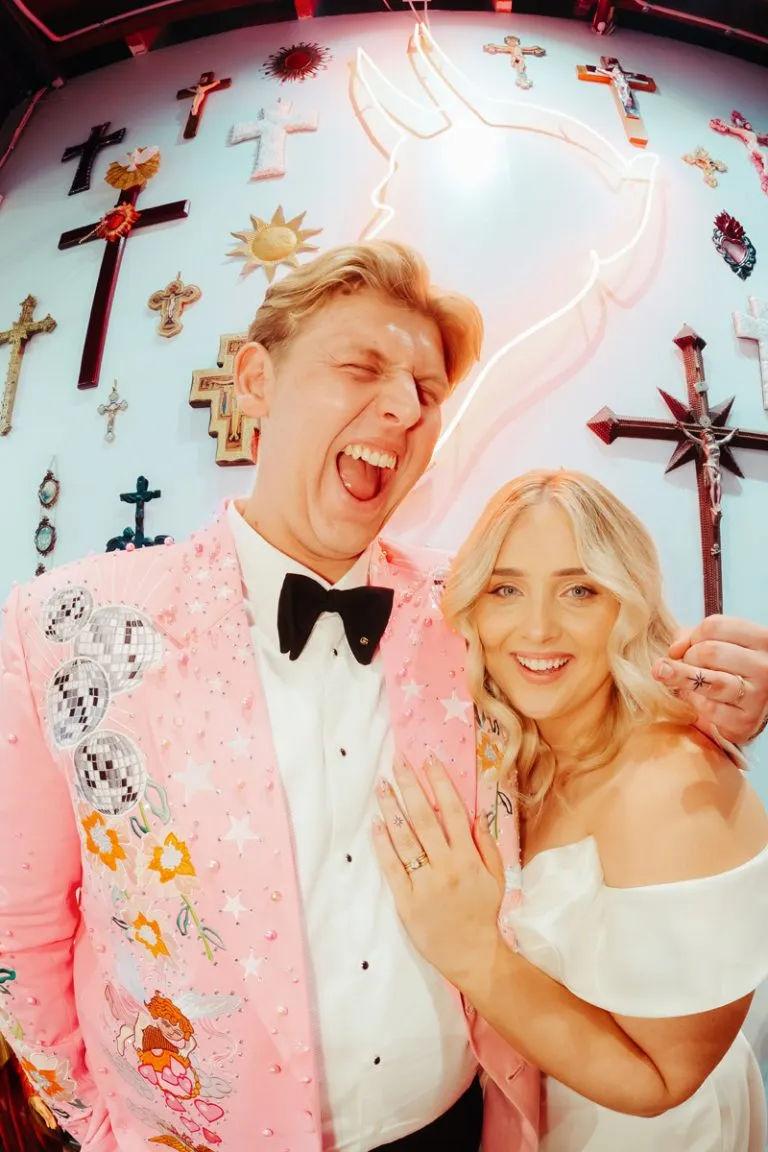
Colour confidence. Burgundy, deep brown, olive, and warm pastels are all firmly on the table. The all-black suit is still a safe option but it’s no longer the only option. Even subtle shifts, like a deep navy with a brown shoe signal intention.
Broader, more relaxed silhouettes. Ultra-slim fits are softening. Suits with slightly wider trousers, softer shoulders, and a more natural waistline are taking over; they move better, photograph better, and feel more comfortable across a long day.
The double-breasted comeback. Once considered old-fashioned, the double-breasted jacket is back with a slimmer cut and modern proportions. Peak lapels, a six-button front, and a clean chest line, it’s a strong, structured look that works particularly well for grooms who want to stand apart from their groomsmen.
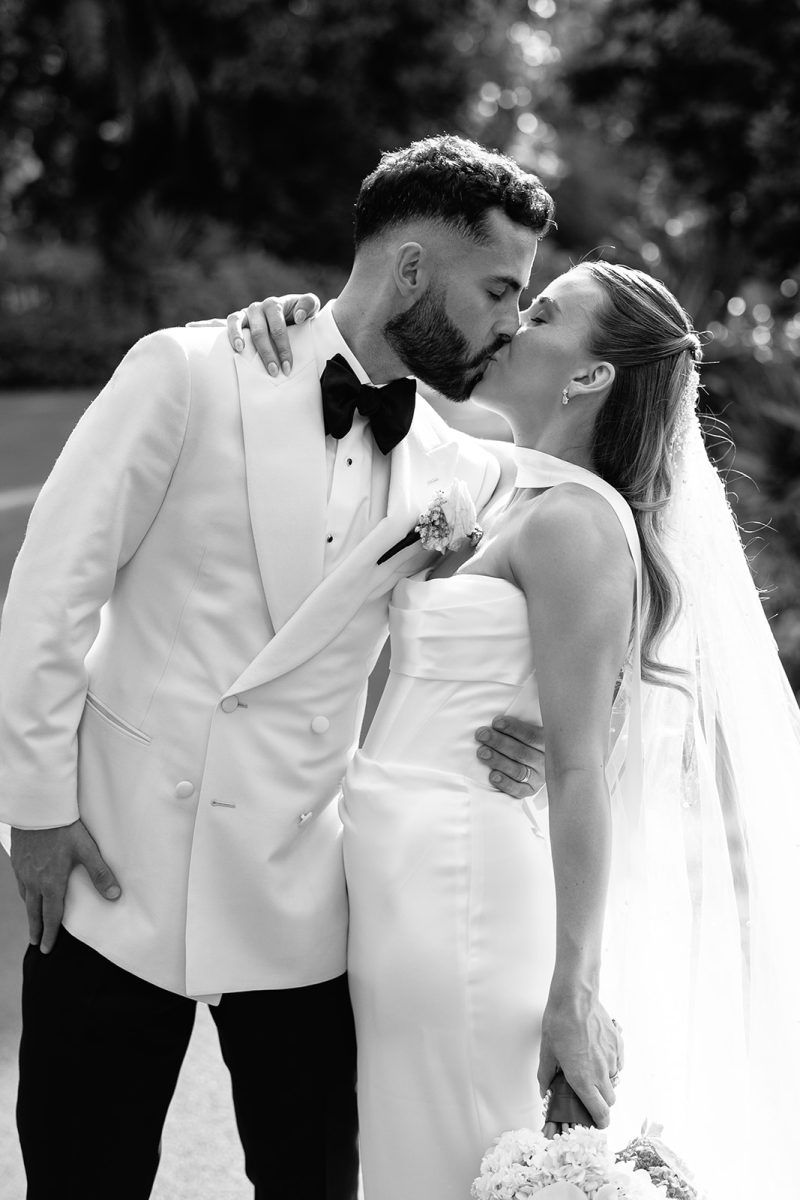
A Note for Grooms
Everything in this guide applies to grooms, groomsmen, and guests, but if you’re the one getting married, here are a few additional thoughts.
Your suit is one of the few tangible things you’ll keep from your wedding day. Investing in custom tailoring, whether through a brand like our vendor InStitchu, Suitably or a local tailor, means it will fit properly, feel comfortable across a long day, and carry details that are meaningful to you.
Think about the full day, not just the ceremony. You’ll be standing, sitting, hugging, dancing, and perhaps running through a field at some point. Your suit needs to move with you.
And don’t underestimate the power of a second look. A velvet or contrast jacket for the evening reception, or simply removing the tie and swapping shoes, can give your outfit a completely different energy for the dance floor.
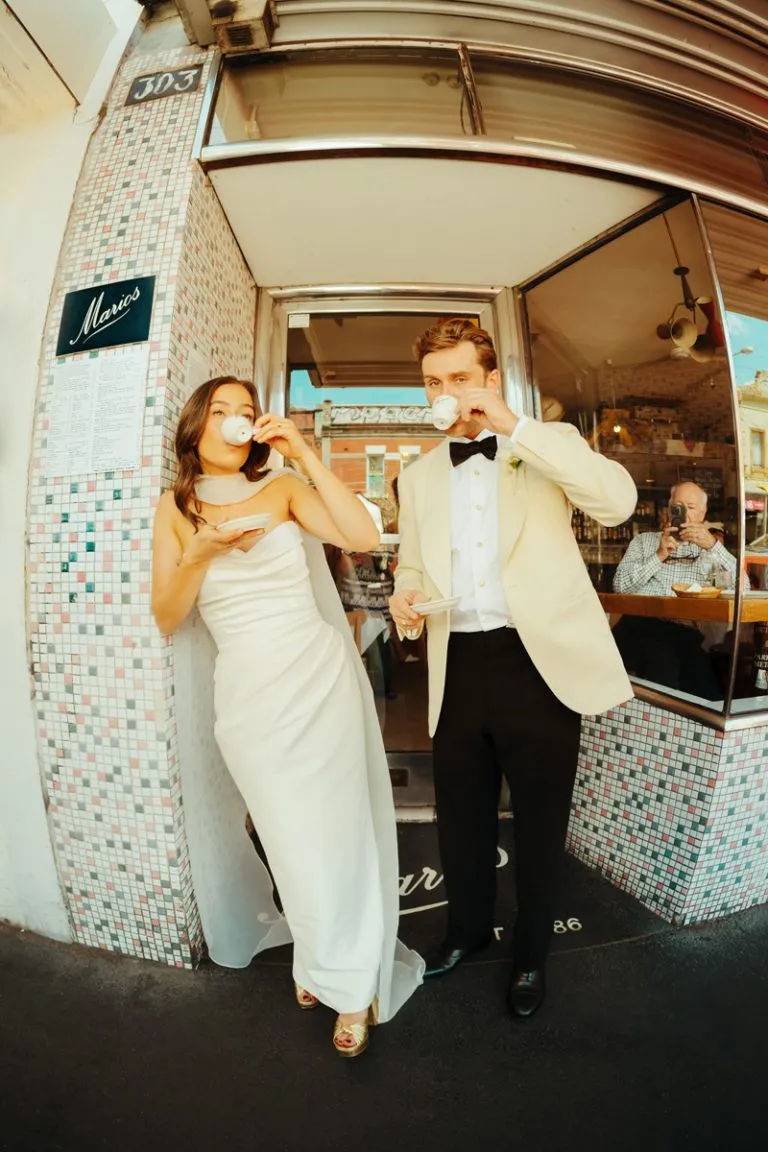
If you’re looking for custom tailoring, groomswear specialists, or styling advice for your wedding day, start your search here.
A mid-tone suit in navy, grey, or earth tones is the safest and most versatile option. Pair with a collared shirt and either a tie or an open collar, depending on the venue. Subtle patterns, a contrasting waistcoat, or a considered accessory like a lapel pin add personality without overdressing.
Black tie requires a tuxedo. Black tie optional means a tuxedo is welcome but a dark, well-tailored suit is equally appropriate. The key difference is the level of flexibility — black tie optional gives you room to choose a dark suit with formal accessories rather than committing to the full tuxedo.
Absolutely. Deep burgundy, olive, chocolate brown, warm stone, and even pastels are all strong choices for 2026 weddings. The key is matching the colour to the dress code and venue — bolder tones work well for cocktail and semi-formal events, while lighter shades suit destination and garden weddings.
The 2026 Oscars red carpet highlighted brooches and lapel pins as the standout accessory for formal menswear. Beyond that, a quality watch, considered cufflinks, and polished shoes are the essentials. For cocktail and semi-formal dress codes, a pocket square or contrasting tie adds personality.
Not necessarily. Complementary colours and textures create a more modern, cohesive look than identical suits. Many grooms in 2026 are choosing a slightly different jacket, waistcoat, or accessory to distinguish themselves from their groomsmen while keeping the overall palette unified.