Your wedding dress timeline: when to start shopping and what to expect
If you’ve just got engaged and the words “so, have you started looking at dresses?” are already coming at you from every direction, I’ve got you. You DO have time. But how much time, exactly, depends on the kind of gown you’re after and the experience you want to have along the way.
We asked three of Australia’s trusted bridal specialists to share the timelines they wish every bride knew before walking through the door.
Their advice? Starting early simply gives you more space to enjoy the process.
Table of contents
- How far in advance should you start wedding dress shopping?
- What does the wedding dress shopping process look like?
- How long does a made-to-order wedding dress take?
- How long does a custom wedding dress take to make?
- What about customisations to a made-to-order gown?
- What happens during wedding dress alterations?
- What if I’m short on time?
- A quick-reference wedding dress timeline
- The real takeaway
- Wedding Dress Timeline FAQs

How far in advance should you start wedding dress shopping?
The short answer: earlier than you think.
The longer answer depends on whether you’re going custom, made-to-order, or off-the-rack; but every bridal specialist we spoke to agreed that nine to twelve months before your wedding is the sweet spot to begin your search.
Sam from The Bridal Curator recommends allowing five to six months for gown production with your chosen designer, followed by two to three months for alterations, the essential stage where a made-to-order gown is tailored to fit you perfectly. In an ideal world, that places your timeline at around nine months before your wedding day.
But as Sam is quick to point out, what that framework doesn’t account for is perhaps the most important part: the time it takes to truly find the one. “That search should never feel rushed,” she says.
Anastasia from Carte Blanche agrees and pushes the timeline even further. “When it comes to a European made-to-order gown, I always guide brides to begin their search at least nine to twelve months before the wedding date,” she says.
For fully custom gowns, the timeline extends further still. Luci Di Bella recommends a minimum of twelve months to create a custom gown, due to the extensive process of designing, creating and fitting the gown.
What does the wedding dress shopping process look like?
Finding your gown is rarely a single lightning-bolt moment. As Sam from The Bridal Curator describes it, “Finding your gown is a process of discovery, refinement, and quiet certainty that unfolds over time. The most seamless bridal experiences begin not with urgency, but with intention, allowing space for both inspiration and craftsmanship to meet.”
That first appointment is about exploration; understanding silhouettes, fabrics, and the subtle details that resonate with you. It’s also where your relationship with your stylist begins, and Sam describes this as a collaborative process built on trust and clarity. Returning for a second or third appointment often brings a sharper sense of direction, helping you move from possibility to decision with confidence.
One of the most valuable things you can bring into this process is visual clarity. Reference imagery, whether it’s a detail, a silhouette, or a pinterest board of styles you love, helps communicate your vision clearly to both stylists and designers. From there, allowing time for approvals, adjustments, and refinements ensures the outcome feels considered rather than compromised.
How long does a made-to-order wedding dress take?
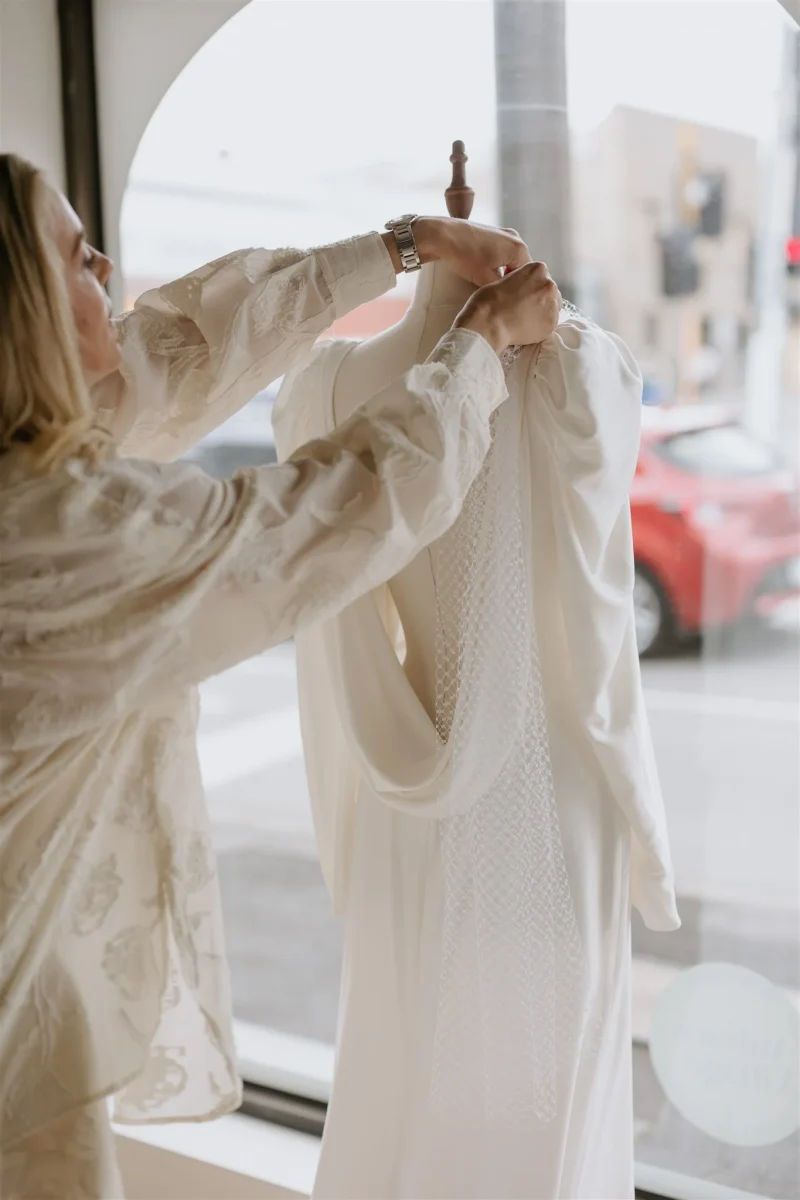
Once your gown is chosen, the behind-the-scenes process is more intricate than most couples realise. Working with made-to-order pieces means working within each designer’s unique rhythm, and as Sam from The Bridal Curator explains, timelines and capabilities can vary. Some designers allow for production-stage variations, while others maintain a more fixed approach to their designs.
A standard made-to-order gown typically takes five to six months in production, followed by two to three months for alterations. That’s a total of approximately seven to nine months from order to wedding day.
For European made-to-order gowns, Anastasia from Carte Blanche explains why the process often requires even more breathing room. “This allows time for the designer to source the fabrics, often woven to order by historic mills in France or Italy, then craft the piece by hand in their atelier, ship it internationally, and still leave a generous window for alterations.” She recommends nine to twelve months as a minimum.
Her message to newly engaged brides is clear: “If you’ve just got engaged and feel like it’s ‘too soon’ to be thinking about a dress, it isn’t. Starting early isn’t pressure; it’s the most generous gift you can give yourself.”
How long does a custom wedding dress take to make?
If you’re dreaming of a gown designed from scratch, a one-of-a-kind piece built entirely around your vision, you’ll need to allow the most time of all.
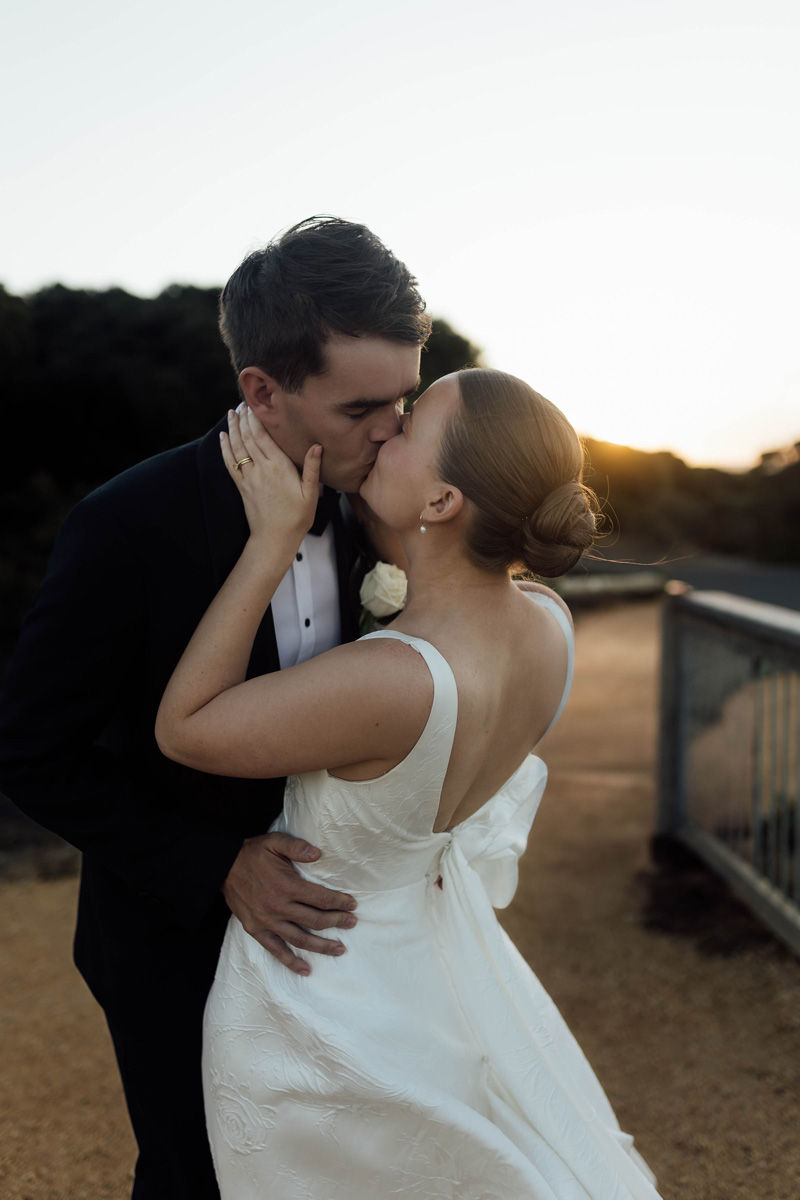
Luci Di Bella recommends a minimum of twelve months for a custom gown. All their gowns are made in-house, and fittings occur over an extended period of time, a process that allows the design to be refined and perfected at every stage.
Custom gowns involve an entirely different creative journey: initial consultations, fabric sourcing, pattern drafting, toile fittings, construction, and multiple rounds of adjustments. Each step requires time and expertise, and the result is a piece that’s uniquely yours in every detail.
What about customisations to a made-to-order gown?
Where customisations are possible, additional time becomes invaluable. Sam from The Bridal Curator describes the range of modifications couples request, from creating a bespoke detachable overskirt to reworking sleeve silhouettes, such as transforming a soft, draped off-shoulder detail into a more structured cap sleeve on a silk gown. These changes require thoughtful coordination between the stylist, designer, and production team, and allowing time for this ensures each adjustment is executed with precision.
It’s worth noting that not all designers offer the same level of customisation. As a stockist representing a curated selection of international designers, Sam explains that each label has its own approach: some allow for production-stage variations, while others maintain a more fixed design. Your stylist will be able to guide you on what’s possible within your chosen designer’s framework.
What happens during wedding dress alterations?
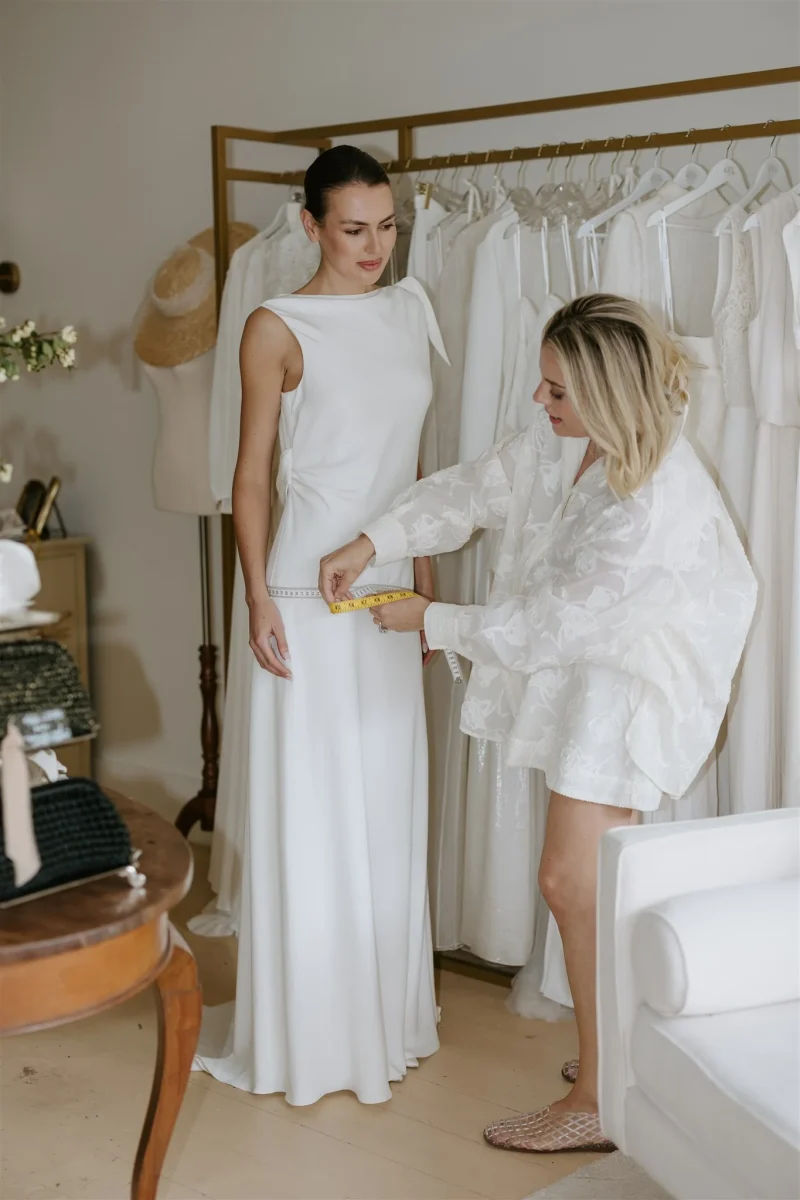
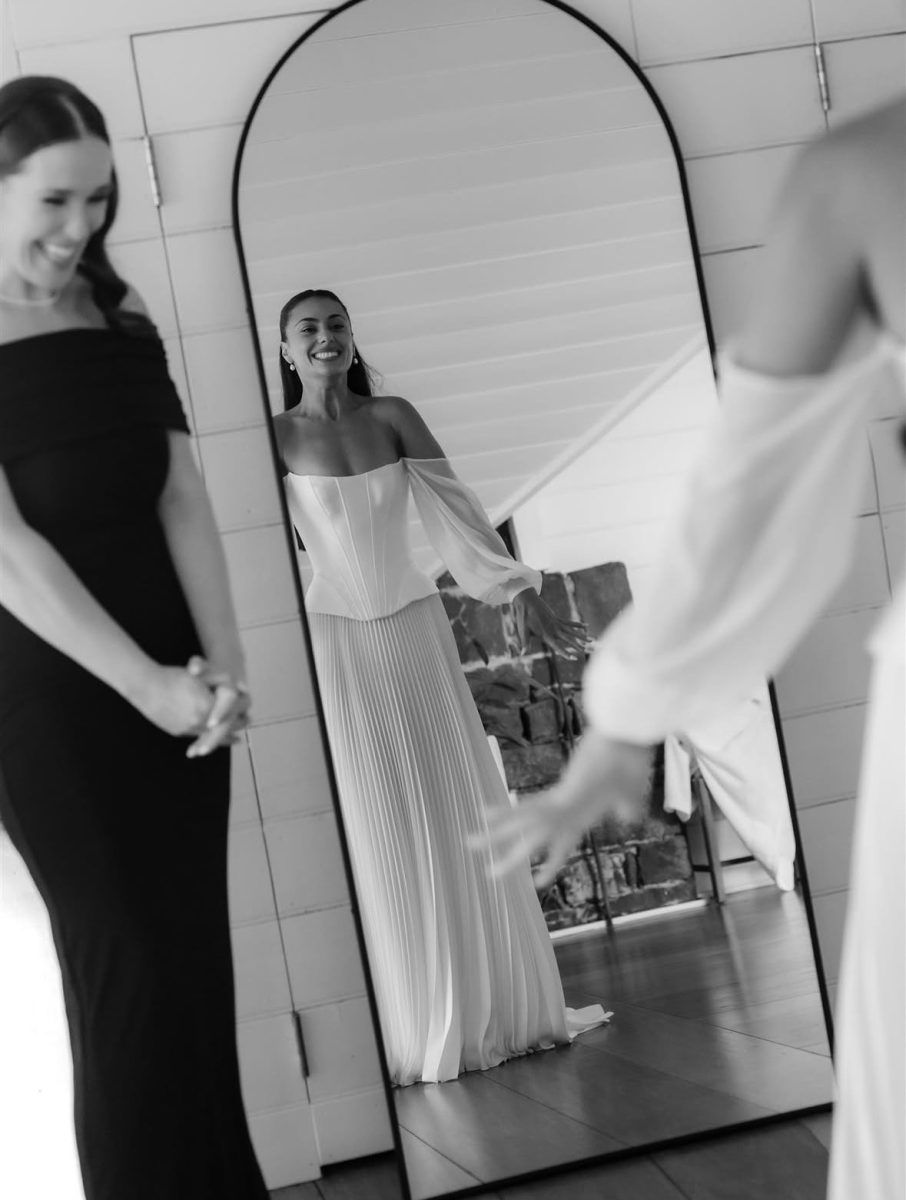
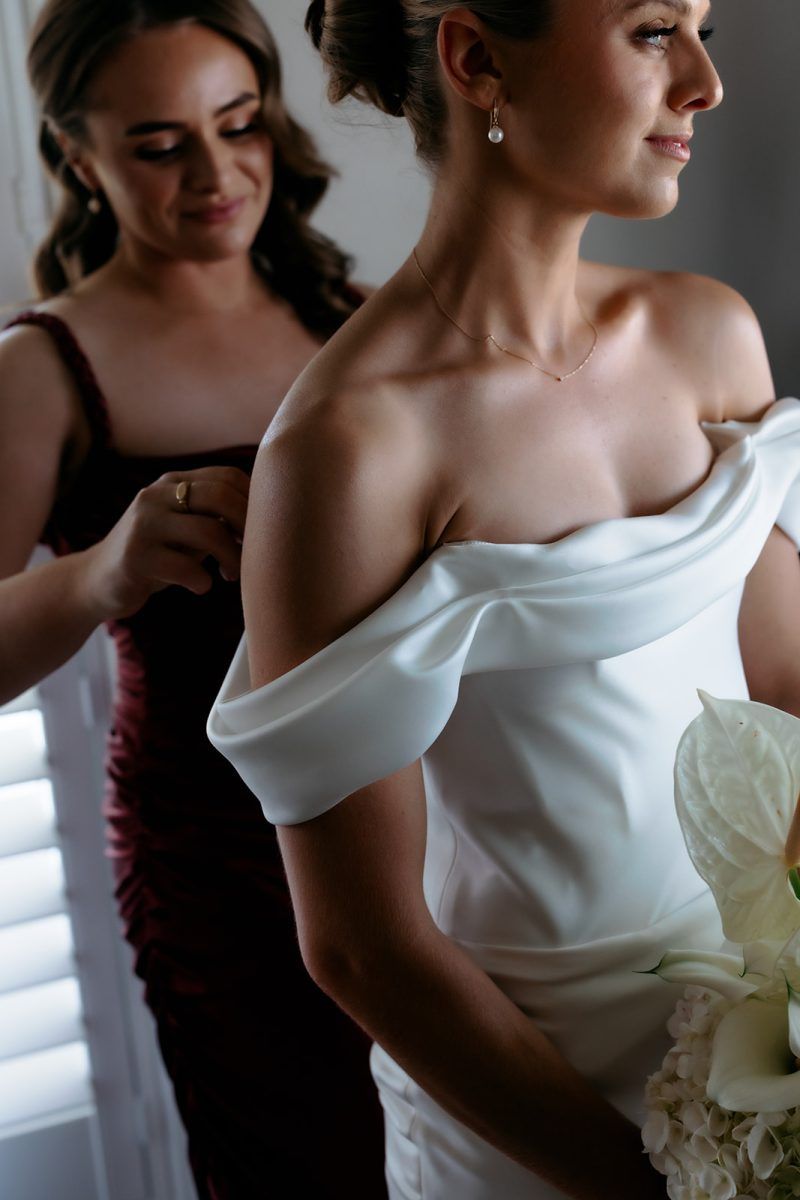
Alterations are the final and often most transformative stage of the process. As Sam from The Bridal Curator puts it, in cases where production changes aren’t available, “alterations become your greatest tool.” From refining the bodice to adjusting hem length or subtly shifting skirt volume, a skilled tailor can bring a gown into complete alignment with your vision.
This stage is less about transformation and more about precision; ensuring the gown feels as effortless as it looks. Allow two to three months for this process, and give your tailor the opportunity to refine the final fit across multiple appointments.
What if I’m short on time?
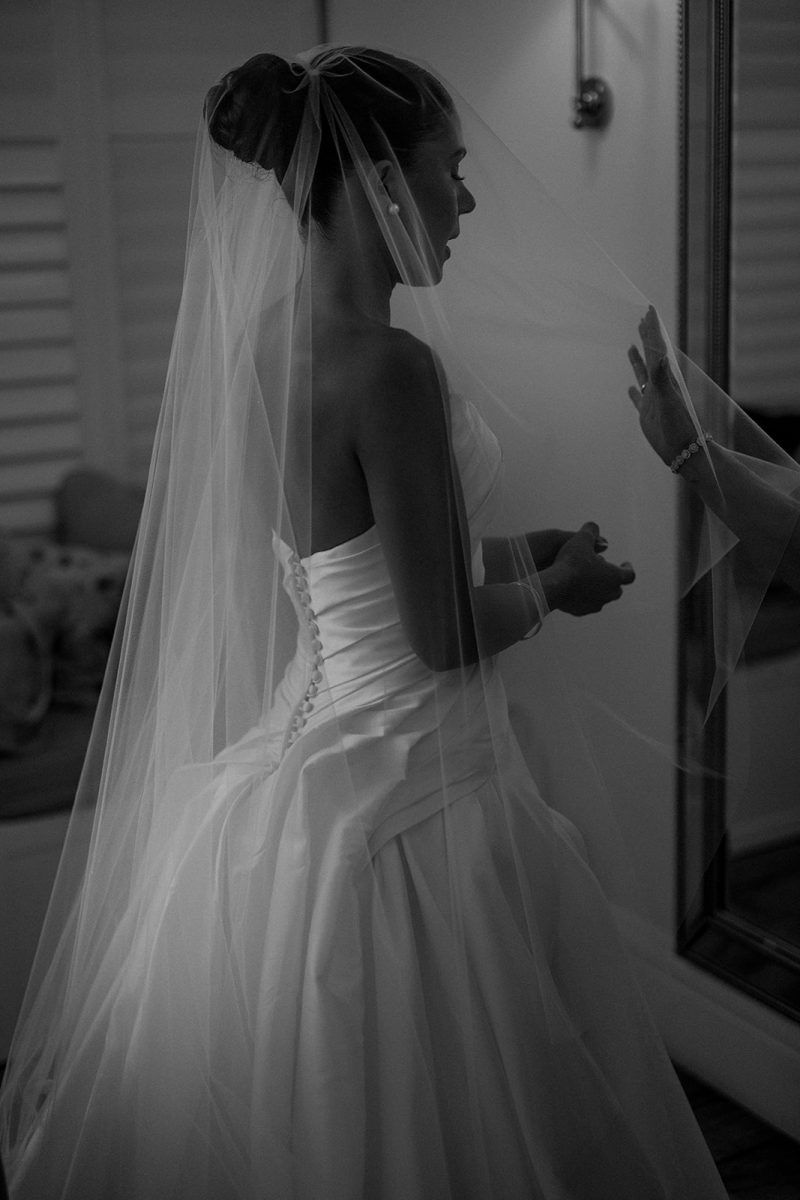
If your wedding is less than nine months away, you still have options but your approach may need to shift. Off-the-rack gowns and sample sales can offer immediate availability, and many boutiques carry gowns that can be purchased and altered within a shorter timeframe.
Rush orders are sometimes possible for made-to-order gowns, but Anastasia from Carte Blanche is candid about the trade-offs: “Rushing any part of that process either costs extra in rush fees or compromises the experience entirely, and neither is something I want for you.”
The most important thing is to be upfront with your stylist about your timeline from the first appointment. They can help you navigate what’s realistic and find the right path for your situation.

A quick-reference wedding dress timeline
12+ months before: Begin your search if you’re considering a fully custom gown. Start gathering inspiration and booking consultations with custom designers.
9–12 months before: The ideal window for made-to-order gowns, especially European designers. Book your first bridal appointments and begin exploring silhouettes, fabrics, and designers.
6–9 months before: Place your order. Your gown enters production. If customisations are part of your design, confirm these details with your stylist and designer.
3–4 months before: Your gown arrives. Begin the alterations process with your tailor, typically two to four fittings.
1–2 months before: Final fitting. Your gown is complete, pressed, and ready. Book your final fitting with enough breathing room that you’re not stressed if minor tweaks are needed.
Wedding week: Collect your gown (if not already home). Store it carefully — hung, covered, and away from direct sunlight.
The real takeaway
As Sam from The Bridal Curator puts it beautifully: “Ultimately, the timeline isn’t just about logistics — it’s about creating space for a gown to be thoughtfully made, carefully tailored, and deeply felt. When each stage is given the time it deserves, the result is more than a dress; it’s a piece that reflects not only your style, but the journey you took to find it.”
Anastasia from Carte Blanche echoes this sentiment. The question she hears most often in her showroom is “Am I too late?” and her answer is always the same: starting early is the most generous gift you can give yourself. Not because it’s urgent, but because it creates space for an experience that should be enjoyable rather than anxious.
Whether you’re twelve months out or six, the best first step is the same: book an appointment, bring your inspiration, and trust the process. The right gown, and the right team, will make the timeline work.
Wedding Dress Timeline FAQs
Most bridal specialists recommend beginning your search nine to twelve months before your wedding. This allows time for gown selection, five to six months for production (for made-to-order gowns), and two to three months for alterations. For fully custom gowns, allow a minimum of twelve months.
A made-to-order gown typically takes five to six months in production, plus two to three months for alterations — a total of approximately seven to nine months. European made-to-order gowns may require nine to twelve months due to international fabric sourcing and shipping.
A fully custom wedding dress — designed from scratch and made in-house — requires a minimum of twelve months. This includes consultations, fabric sourcing, pattern drafting, toile fittings, construction, and multiple rounds of adjustments.
Wedding dress alterations typically take two to three months and involve two to four fittings. This stage covers everything from bodice refinements to hem adjustments and ensures the gown fits perfectly.
Not necessarily. Off-the-rack gowns and sample sales offer immediate availability, and some made-to-order designers offer rush production. However, rush orders may incur additional fees and can limit customisation options. Be upfront with your stylist about your timeline from the first appointment.
It depends on the designer. Some allow production-stage modifications — such as changing sleeve silhouettes or adding detachable elements — while others maintain a more fixed approach. Your bridal stylist can advise on what’s possible within your chosen designer’s framework. Where production changes aren’t available, alterations can achieve many of the same results.
Ready to begin your search? Browse our curated bridal fashion directory to find your perfect match.
With thanks to: Sam from The Bridal Curator | Anastasia from Carte Blanche | Luci Di Bella – Design House