The wedding dress code decoder: what to wear, from black tie to backyard
The invitation arrives. Heavy card, a beautiful serif, possibly a wax seal. You find the date, the venue, the RSVP deadline. Then, tucked into the bottom corner, the line that sends you straight to the group chat: Dress code: garden formal.
(What is garden formal? Does it involve a … hat?! Is a good navy suit too navy? How will I navigate heels in the grass?)
Wedding dress codes have multiplied in recent years, reflecting the shift for couples to weave their signature style and personality through their wedding aesthetic.
Happily, nearly all dress codes sit on one ladder of formality.
Work out which rung you’re on, factor in the venue, the season, the time printed on the card, the couple’s general approach and the outfit comes into focus, usually before the group chat has finished spiralling.
A wedding dress code tells you how formal to dress. The venue, the season and the clock (and to a degree, the style of the couple themselves) show you how to adapt it.
Below, we decode the codes Australian couples are putting on their invitations right now, what guests are wearing to them, and (for the couples reading along) how to write one your guests will thank you for.
In this guide:
- The wedding dress code ladder at a glance
- What does black tie mean at a wedding?
- And white tie?
- What does black tie optional mean?
- Formal
- Lounge suit
- What is creative black tie?
- Colourful black tie
- What does cocktail attire mean for a wedding?
- What does smart casual mean for a wedding?
- What to wear to a garden party wedding
- What to wear to a beach or coastal wedding
- What to wear to a winery or country wedding
- What to wear to a destination or tropical wedding
- Dressing for a Bali wedding
- How to read a themed wedding dress code
- Colour palette dress codes
- What to wear to a wedding with no dress code
- “Come as you are”
- Can you wear white, black or red to a wedding?
- Cultural and religious weddings
- Dressing for the season, the venue and Australian weather
- The current edit: what wedding guests are wearing for spring and summer 2026–27
- For couples: how to choose and word your wedding dress code
- Dress code wording examples
- Wedding dress codes FAQs:
The wedding dress code ladder at a glance
Think of dress codes as a ladder. White tie sits at the top (tailcoats and tiaras for those who own one…!) and a backyard barbecue sits at the bottom. Here are the rungs in between, from most to least formal. Creative black tie sits beside black tie, and themed codes sit wherever the couple pins them.
| Dress code | In a sentence | Dresses and separates | Suits and tailoring |
| White tie | The most formal code there is, and rarer at Australian weddings | Floor-length evening gown, gloves optional | Tailcoat, white waistcoat, white bow tie |
| Black tie | Formal evening dressing, and very much back in fashion | Floor-length gown or tailored evening separates | Dinner suit (tuxedo), black bow tie |
| Creative black tie | Black tie with a signature twist | A gown or dramatic midi with colour, texture or a statement detail | Dinner suit with one wildcard: velvet jacket, deeply toned dinner jacket, patterned bow tie |
| Black tie optional or formal | Dinner suits welcome, dark suits equally correct | Floor-length or an elegant midi | Dinner suit, or a dark suit and tie |
| Lounge suit | Your sharpest suit, with a tie | Polished midi or a formal jumpsuit | Matching suit, tie, dress shoes |
| Cocktail | Dressed up for a party | Knee to midi-length dresses, jumpsuits, two-piece sets | Suit, tie optional |
| Smart casual | A long lunch somewhere very good | Sundress, midi skirt and silk top, wide-leg trousers | Tailored trousers, collared shirt or knit polo, blazer optional |
| Garden party | Daytime polish, lawn-friendly shoes | Florals, pastels, midi lengths, block heels | Linen or cotton suit, loafers |
| Beach formal | Elegant, breezy and sand-aware | Flowing midi or maxi, flat sandals | Linen suit, open collar |
What does black tie mean at a wedding?
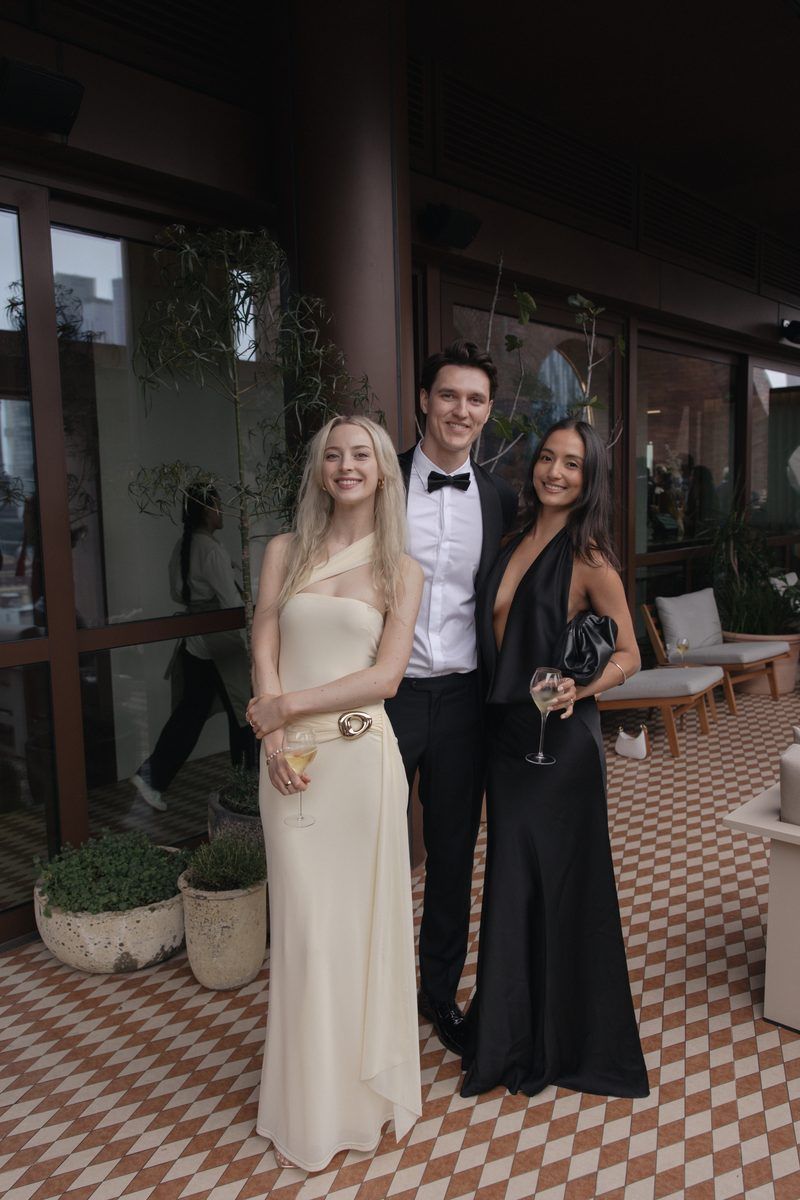
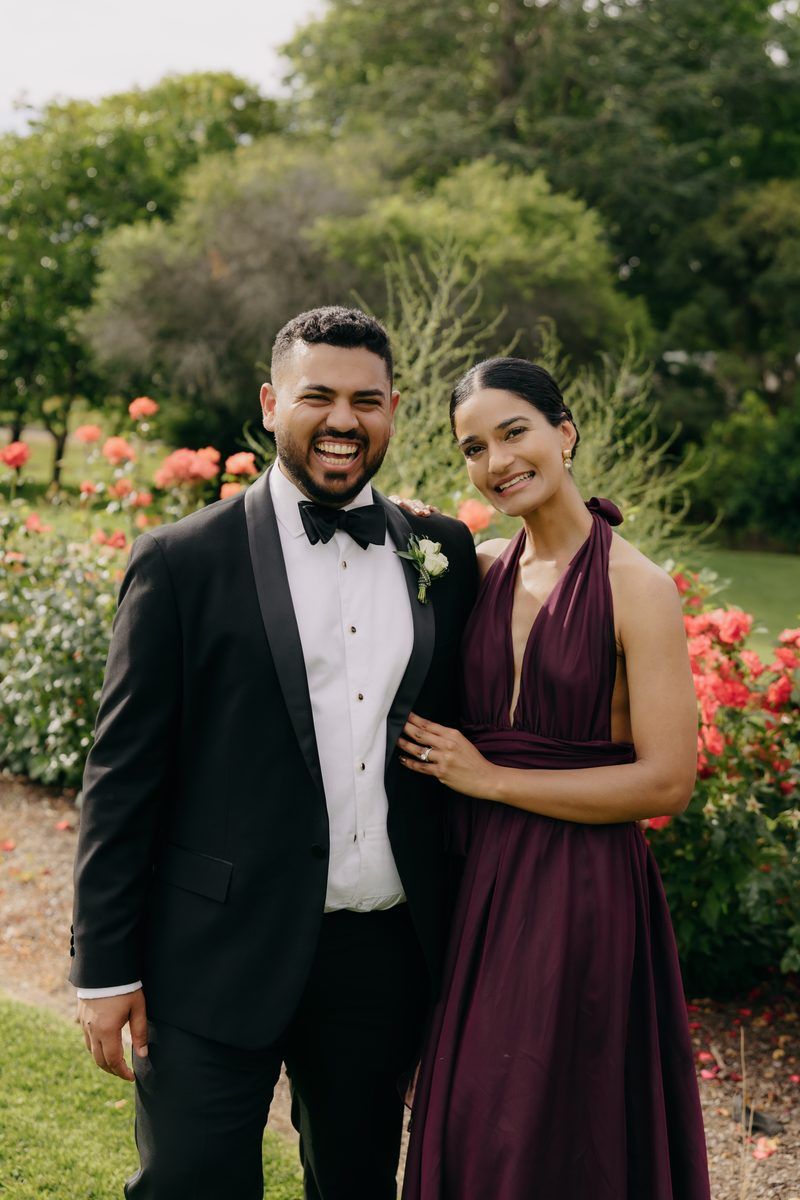
Black tie is formal evening dressing: floor-length gowns and dinner suits (the Australian term for a tuxedo), worn to a celebration that runs well into the night.
It’s also having a moment. After a long run of relaxed, barefoot-in-the-vineyard weddings, couples are reaching for candlelight, elaborate draping and a guest list in its finest. Couples are swapping casual chic for refined glamour, and “black tie” has become the way many of them say dress up, properly.
The fine print: black tie belongs to the evening
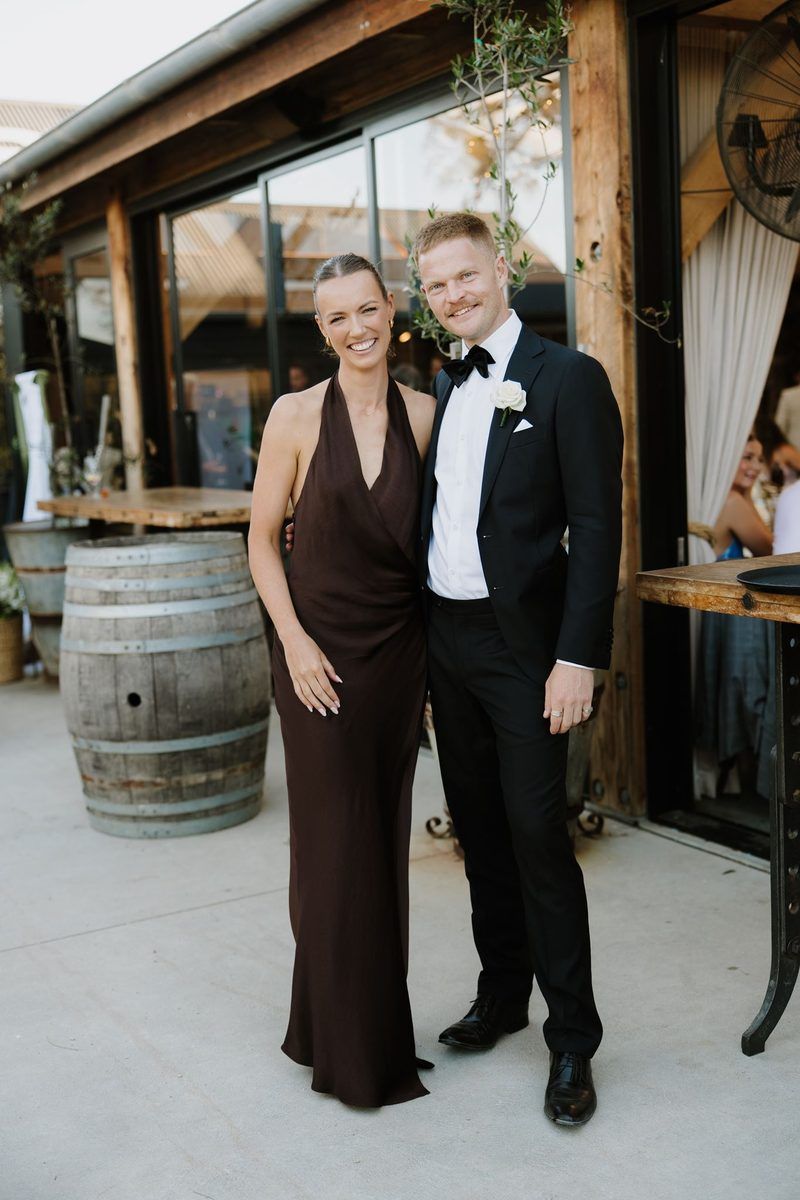
Strictly speaking, black tie is evening wear. Traditional etiquette says it begins after 6pm or once it’s dark, whichever comes first, which is why a 2pm black tie ceremony in full sun makes etiquette purists a little twitchy. The rule is about the clock more than the setting. A marquee, a garden terrace or a vineyard at dusk can all host a beautiful black tie wedding once the sun is on its way down.
Modern etiquette has softened the line, too. A ceremony at 4.30 or 5pm with a reception that starts after six is widely accepted as black tie.
So what do you do when the invitation says black tie and the vows are on a lawn at 3pm in January? Honour the spirit. Floor-length and dinner suits, in the lightest fabrics you can find, with shoes that can handle the grass. The couple is asking for glamour, and glamour is what you’ll bring.
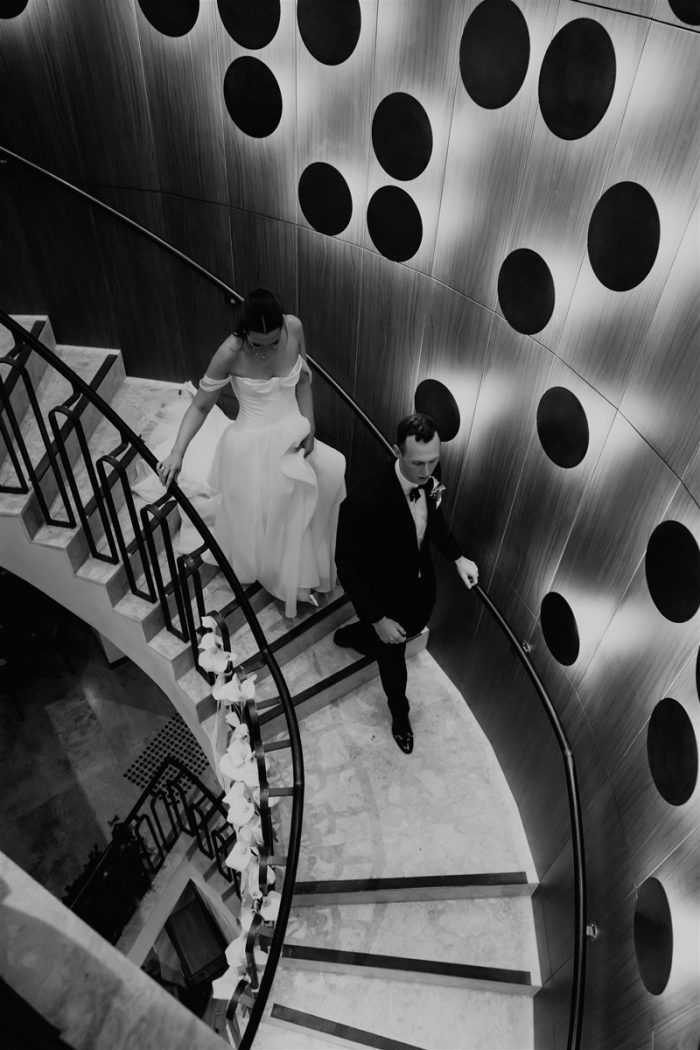
Dresses and separates. A floor-length gown is the classic answer, and tailored evening separates in satin, crepe or velvet sit comfortably beside it. Black, deep jewel tones and inky navies come alive by candlelight. This season’s black tie favourite is architectural draping: a sculpted shoulder, a column that pools at your feet.
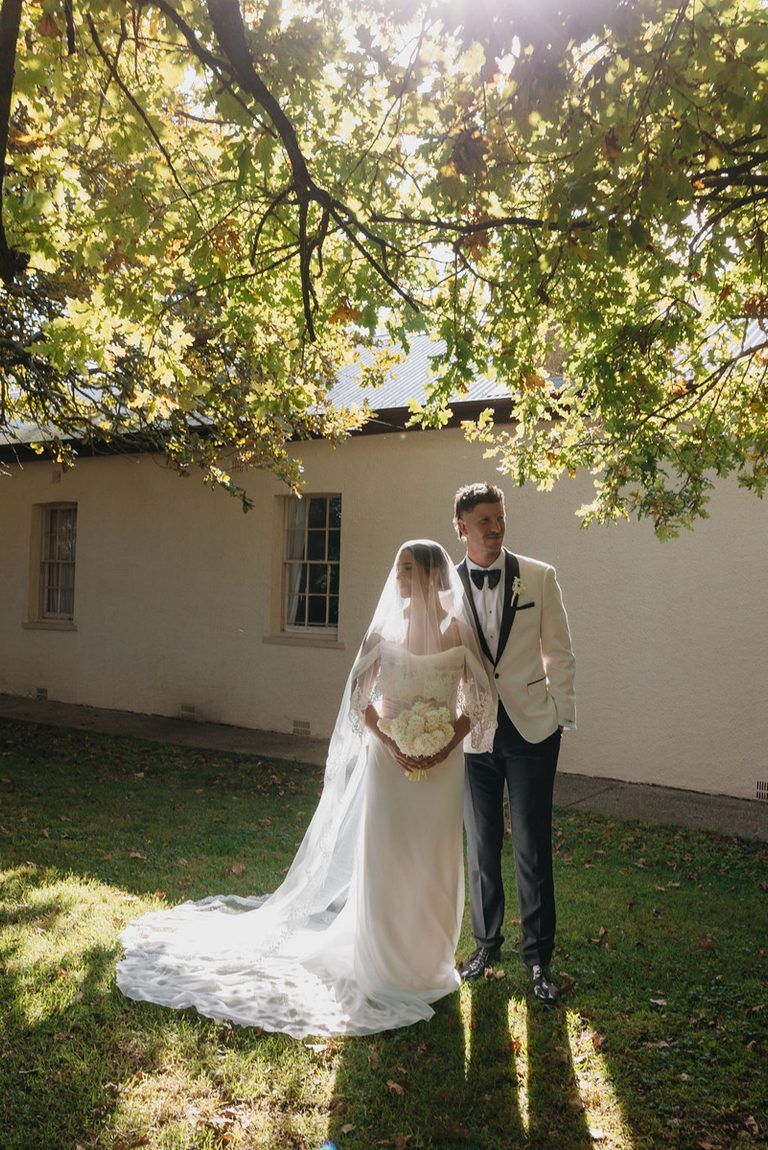
Suits and tailoring. A black or midnight navy dinner suit, white dress shirt, black bow tie and shoes polished to a shine. A self-tied bow tie earns quiet respect (and looks even better artfully undone at 11pm). For summer, ask your tailor about a lighter, half-lined dinner suit, ideally in a breathable wool. Find a high-quality tailor in our recommended vendors.
And white tie?
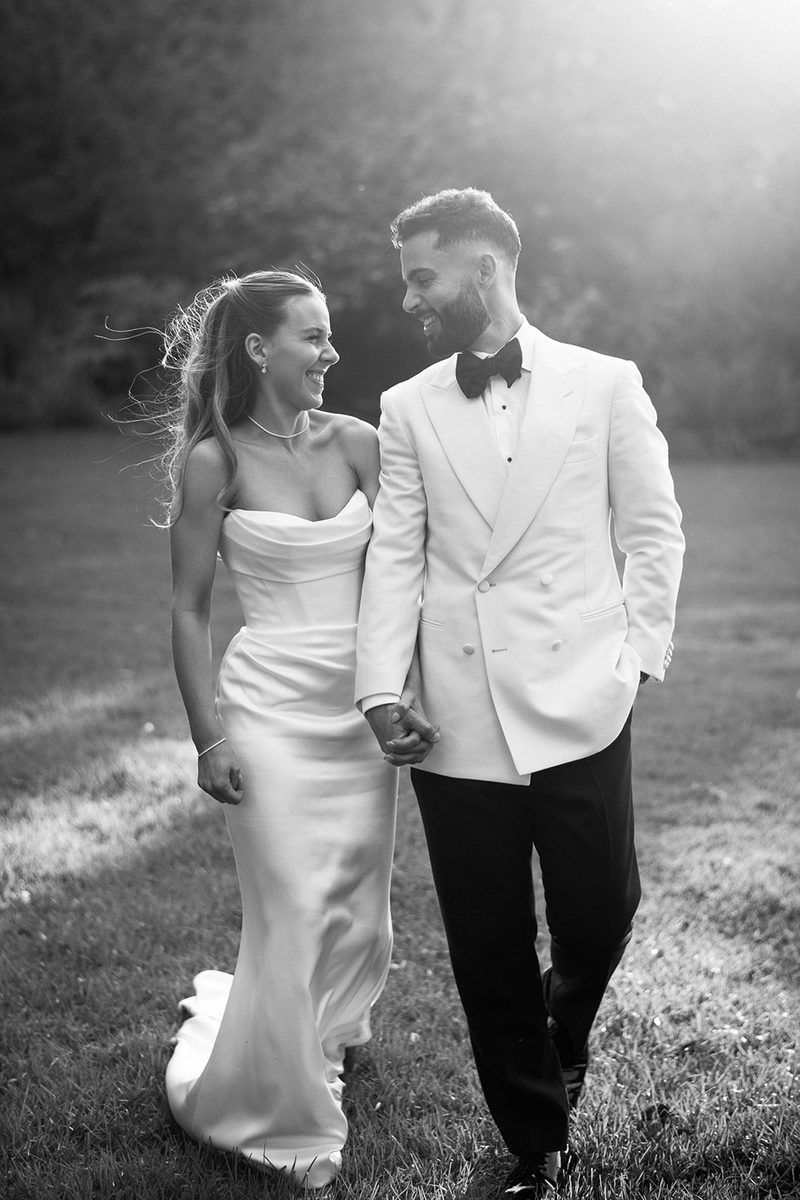
White tie sits one rung higher and belongs to state banquets and the occasional very grand wedding: tailcoat, white waistcoat, white bow tie, floor-length evening gowns, and gloves if you’re so inclined. If it appears on your invitation, expect detailed instructions from the couple. Follow them to the letter and enjoy the rarest dress-up of your social calendar.
What does black tie optional mean?
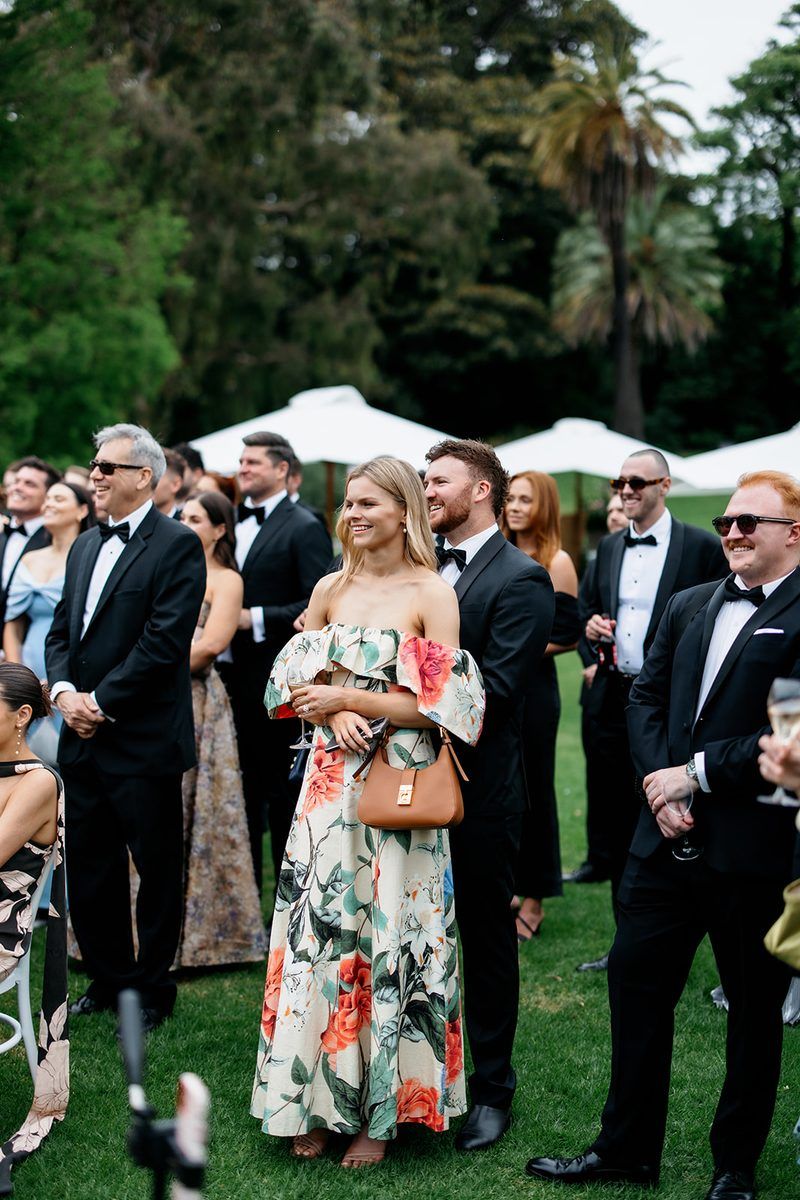
Black tie optional means the dinner suit is welcome and a dark suit with a tie is equally correct. The “optional” applies to the tuxedo alone. Everything else about the evening stays firmly dressed up, so when in doubt, go up a notch.
Dresses and separates. Floor-length, or an elegant midi in a fabric that means business: satin, crepe, beading, lace. Black and jewel tones look especially good here, finished with statement earrings. A jumpsuit makes the cut only when it’s floor-length and fluid enough to pass for a gown; most read a rung too casual for this code.
Suits and tailoring. A dinner suit, or a well-cut suit in black, navy or charcoal with a tie and polished dress shoes. The tan loafers can sit this one out.
You may also spot black tie preferred, which leans closer to the full production: wear the dinner suit if you own one, and the most elegant dress in your wardrobe.
Formal
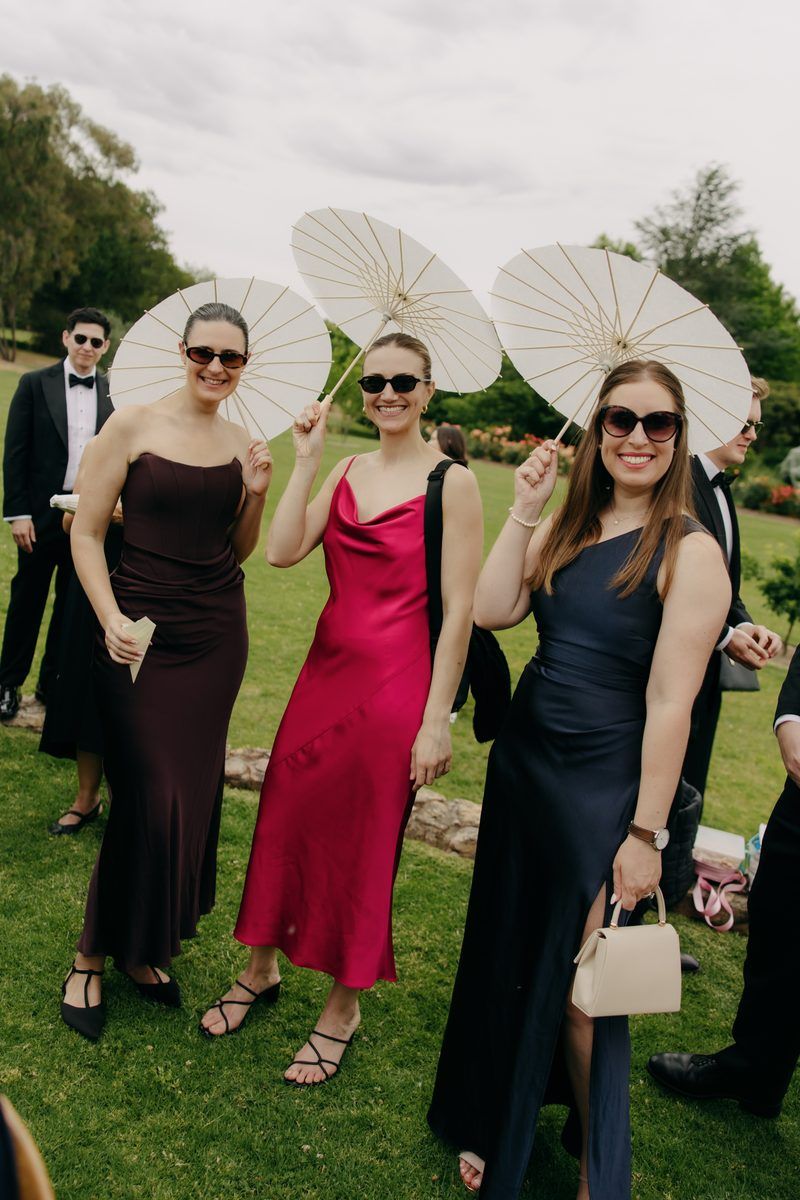
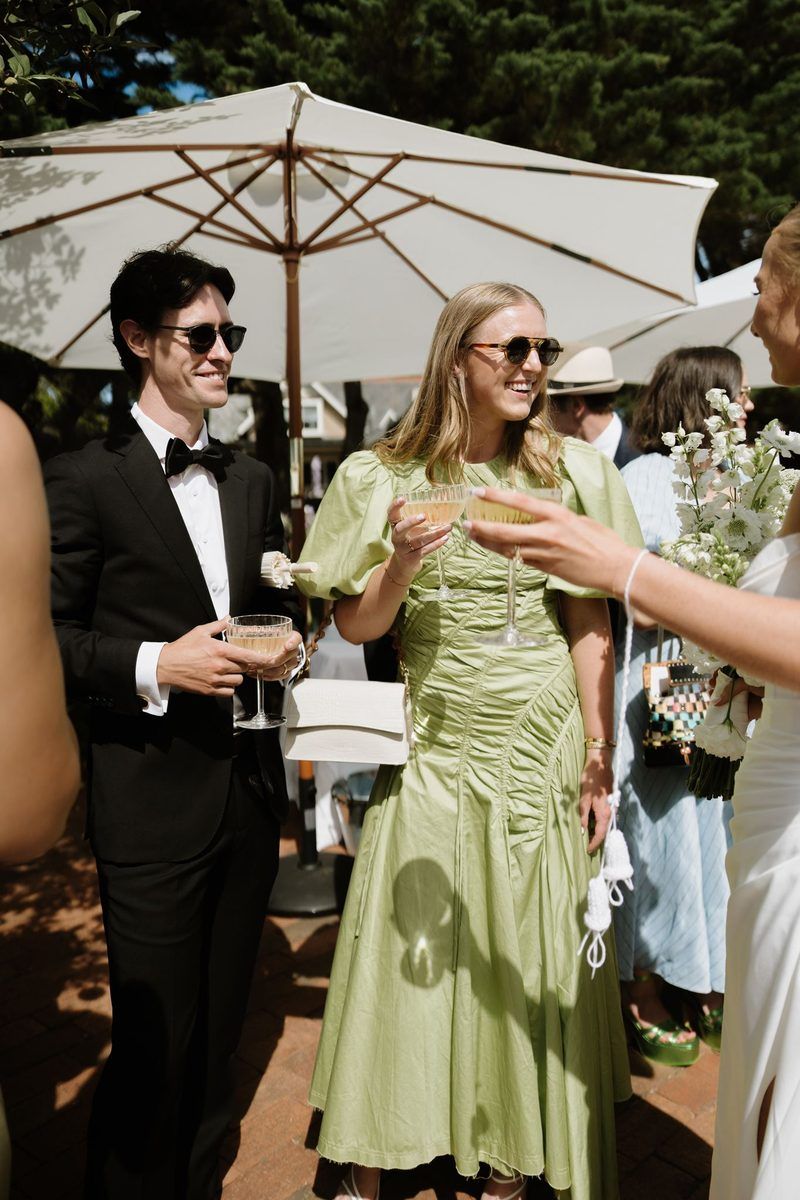
Formal sits beside black tie optional: suit and tie, gown or polished midi. Couples often choose it when they want black tie polish without sending anyone to a hire shop, which makes it a generous choice for a summer wedding. It’s also the most accurate label for an afternoon ceremony in the sun.
Lounge suit
Lounge suit means your sharpest matching suit, worn with a tie. (The name is a Victorian-era leftover, from when this was the relaxed alternative to a frock coat.) It still turns up occasionally on Australian invitations and sits between cocktail and formal.
Wearing a dress? Aim for midi or longer in a structured fabric, or a tailored jumpsuit. Picture the most important lunch of your year, then add a little sparkle.
What is creative black tie?
Creative black tie keeps the formality of black tie and hands you one wildcard: colour, texture, or a silhouette with opinions. Think of it as black tie with a signature.
Dresses and separates. A gown in a bold shade or molten metallic, a cape that moves when you do, feathers at the hem, fringe that catches the light on the dance floor. A floor-length jumpsuit in silk or velvet, cut with the sweep of a gown, reads the brief beautifully.
Suits and tailoring. Start with a dinner suit, then play your wildcard: a velvet jacket in bottle green or burgundy, a patterned bow tie, velvet slippers. Let one flourish lead and keep everything around it classic black tie. (One flourish is a signature. Two is a statement. Five is a costume party.)
Colourful black tie
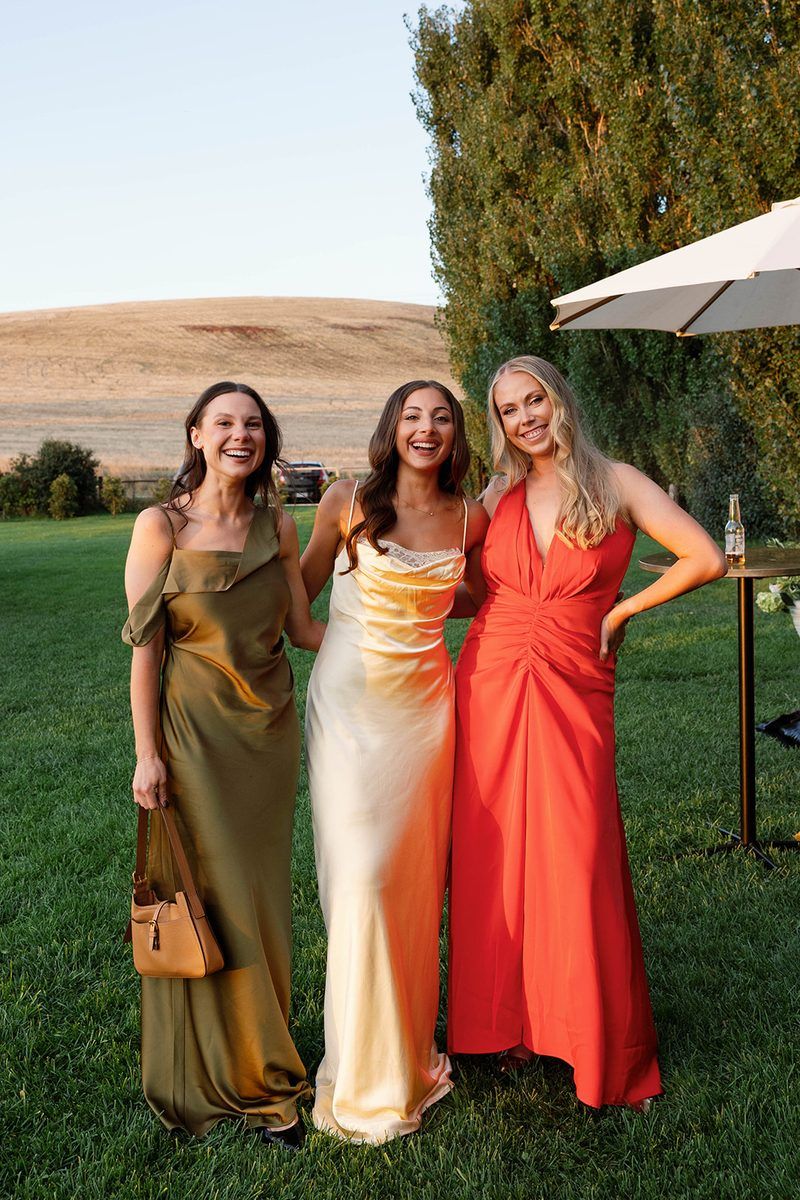
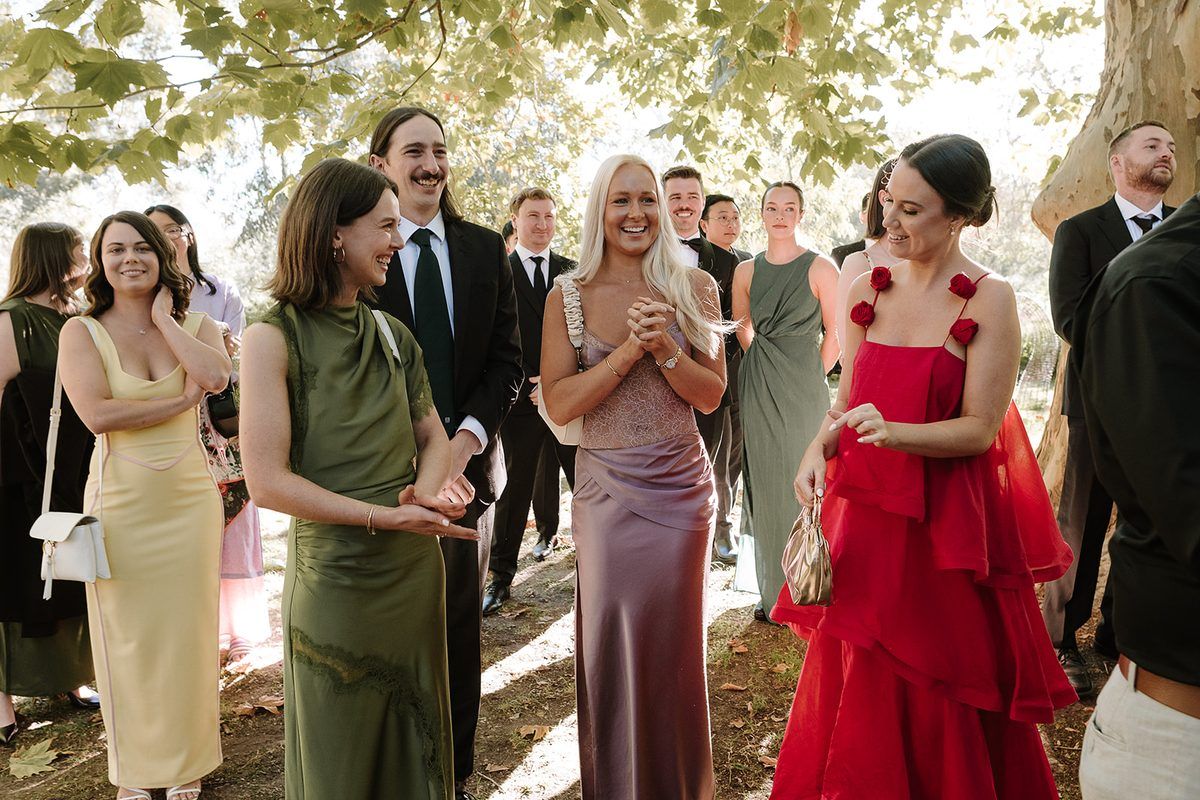
A close cousin that has started appearing on invitations. Full black tie formality (floor-length dresses, dinner suits or dark suits) with an open invitation to wear colour. Cherry red, liquid gold and chocolate satin gowns; a burgundy dinner jacket. The couple wants the photos to glow, so give them something to work with.
What does cocktail attire mean for a wedding?
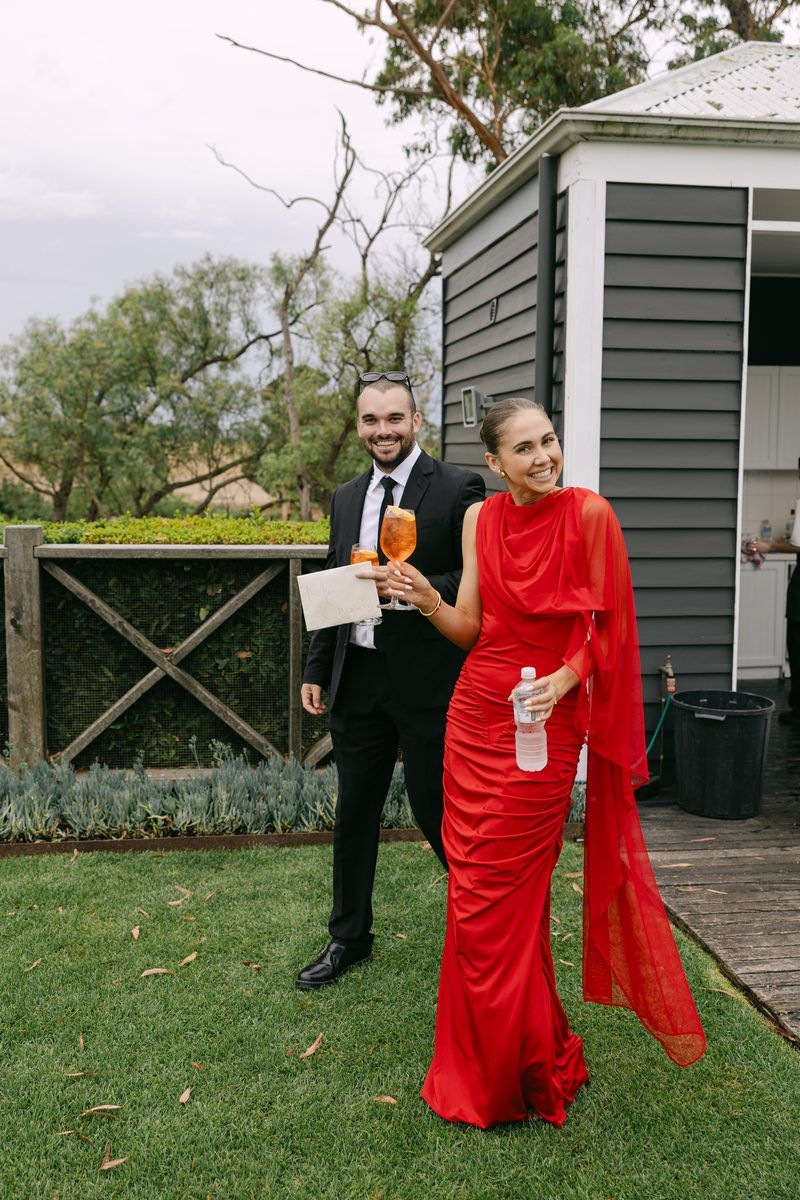
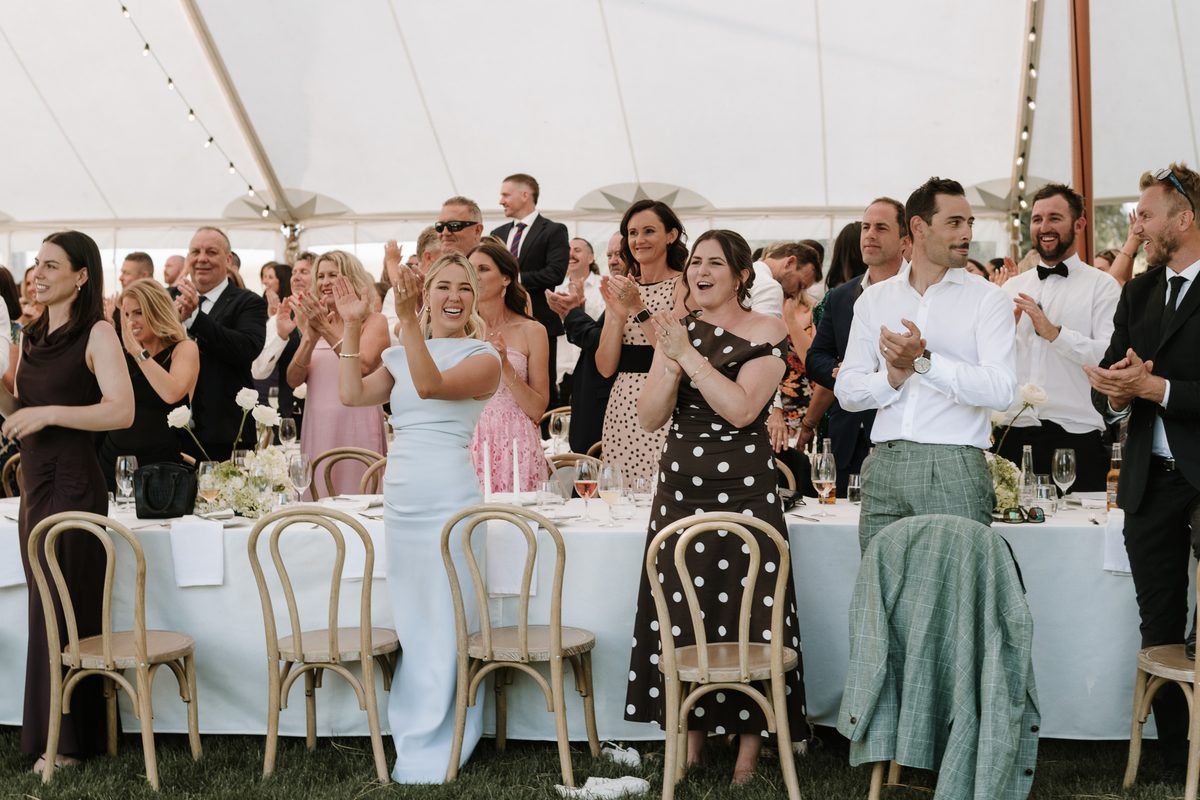
Cocktail attire is dressed-up party wear: knee to midi-length dresses, jumpsuits and dressy separates, and suits with the tie at your discretion. It’s the dress code you’ll see most often on Australian invitations, and the one most open to interpretation.
Dresses and separates. Midi is the sweet spot. A satin slip, a two-piece set, a jumpsuit with an interesting neckline, a dress that arrives with its own scarf draped at the shoulder. Soft shimmer earns its place at an evening reception, and a sharp mini works at a city cocktail wedding when the fabric and accessories carry the polish.
Suits and tailoring. A well-cut suit in navy, mid-grey or olive for evening; stone, sage or soft blue for daytime. Wear a tie, or trade it for a knit tie or an open collar in summer. Loafers and derbies both belong here, socks optional (within reason).
Reading the adjective. Cocktail now arrives with company: elevated cocktail, summer cocktail, beach cocktail, disco glam cocktail. Treat the extra word as your brief. Elevated means midi and a tie. Summer means linen and lighter colour. Disco glam means one sequinned or metallic piece, worn with total commitment and at least one turn on the dance floor.
What does smart casual mean for a wedding?
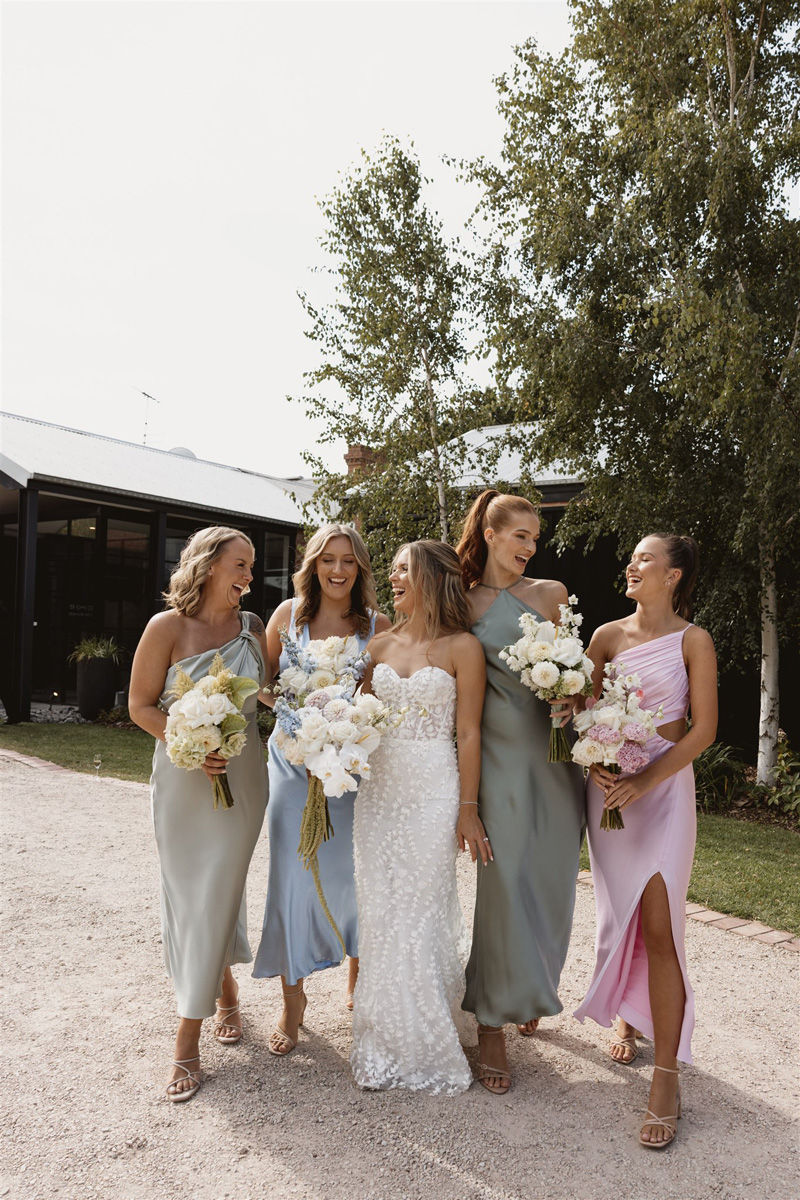
Smart casual at a wedding is the outfit you’d wear to a long lunch somewhere very good: a dress or polished separates, tailored trousers with a collared shirt or fine knit polo, and shoes that can manage a cobbled laneway. It sits a step above everyday smart casual, because it’s still a wedding and there will still be photos.
Dresses and separates. A midi or maxi sundress, a linen co-ord, wide-leg trousers with a silk top, a pleated skirt and a fitted knit. Flat sandals, espadrilles and low block heels all suit the brief.
Suits and tailoring. Tailored linen or cotton trousers, a crisp shirt or fine knit polo, and loafers. An unstructured blazer pulls it together for the ceremony and conveniently comes off for the speeches. Denim and sneakers can wait for the recovery brunch, unless the couple has named them.
Dressy casual is the same idea with a little more polish. Read it as smart casual, dressed for the photos.
What to wear to a garden party wedding
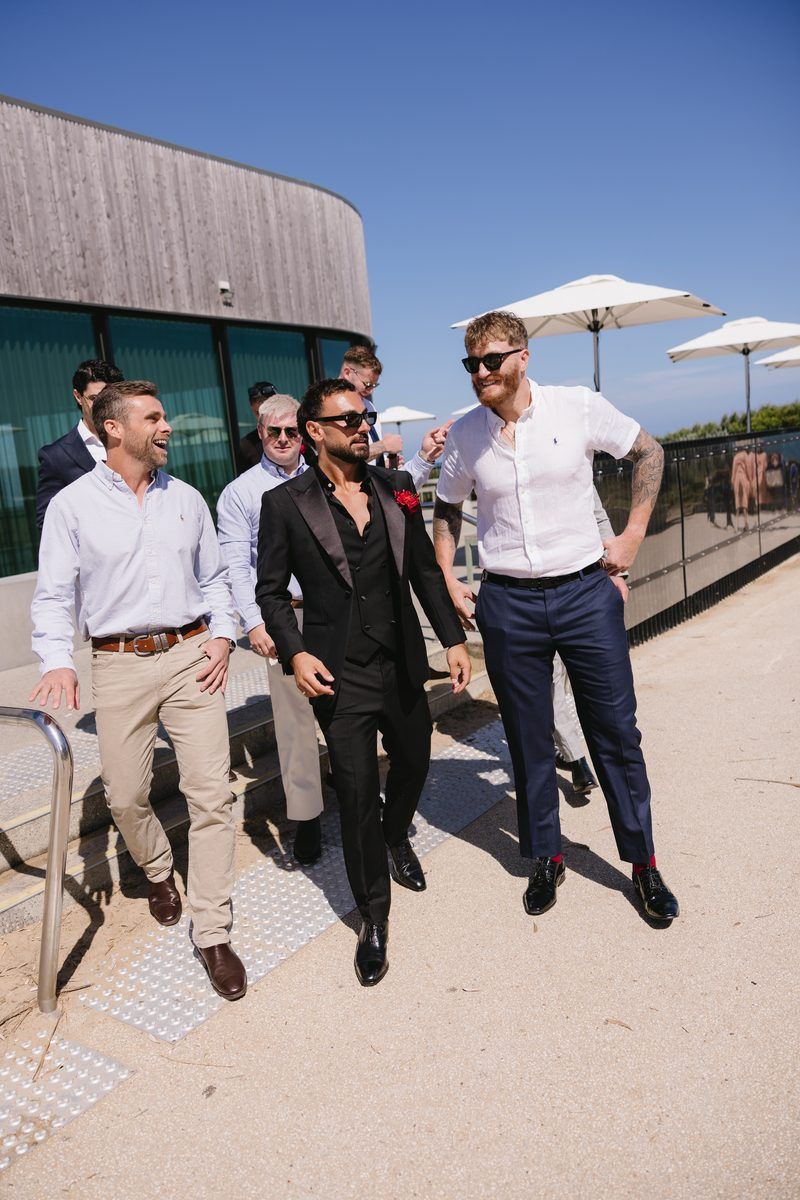
A garden party dress code asks for daytime polish with a romantic streak: florals, pastels, midi lengths, light tailoring, and shoes that have made their peace with a lawn.
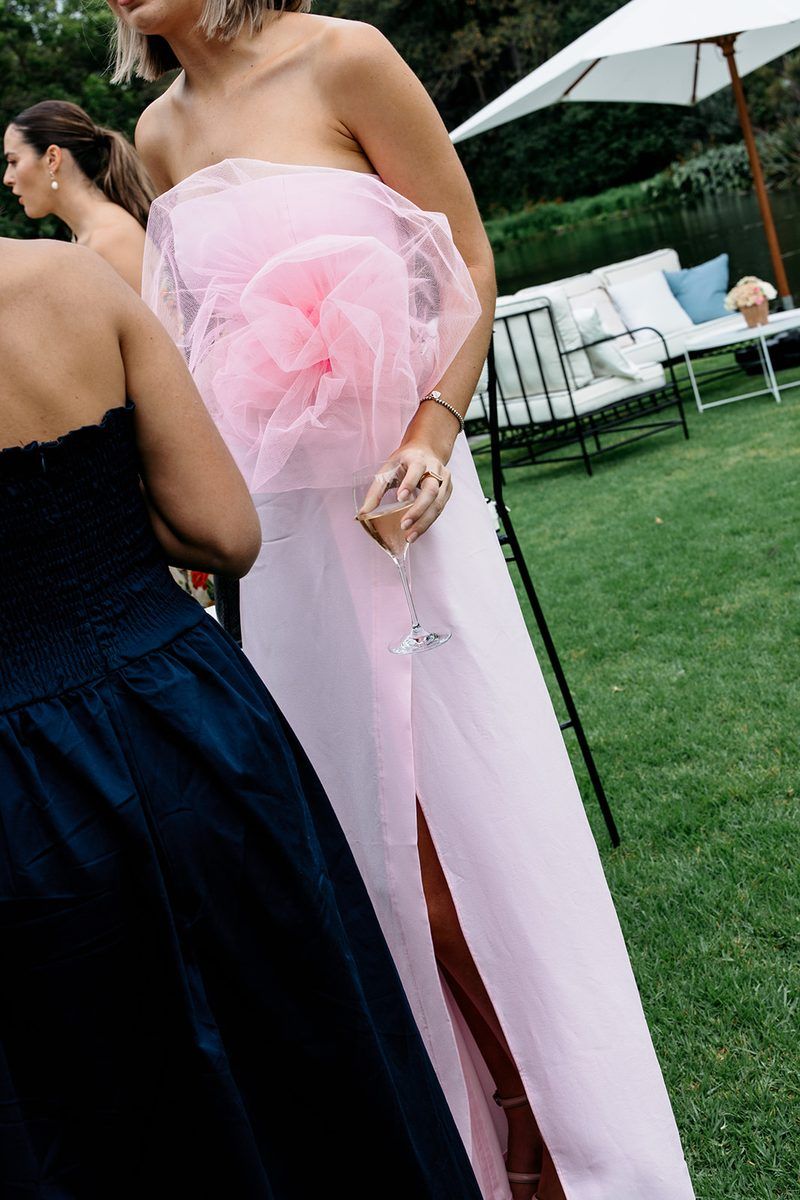
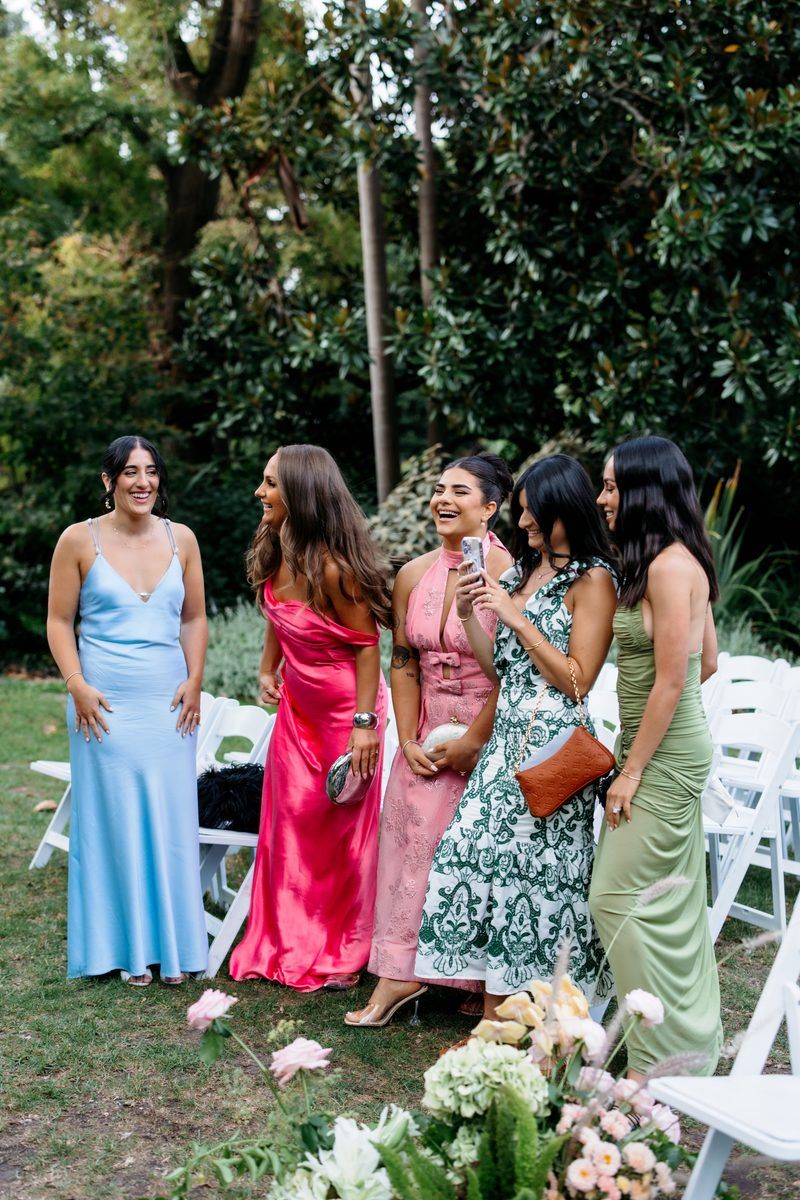
Dresses and separates. This is where florals earn their keep, and this season they’ve been magnified: one bloom across a bodice, a skirt of oversized daisies. Butter yellow, icy pink, sage and soft blue look at home among the roses, as do tea-length hems and puff sleeves. A wide-brimmed hat suits a sunny afternoon ceremony. If yours has serious reach, be kind and sit towards the back.
Suits and tailoring. A linen or cotton suit in stone, sage, sky blue or soft tan, with an open collar or knit tie, and loafers. Pastel suiting has graduated from the groomsmen’s line-up, and it looks very good on guests.
Shoes. Block heels, wedges (a big trend this season, conveniently) and dressy flats. Stilettos and lawns share a long and muddy history, and a pair of heel protectors in your clutch is a small act of self-love.
Formal garden party keeps the setting and raises the stakes: floor-length or midi in light, breathable fabrics, and a suit and tie.
What to wear to a beach or coastal wedding
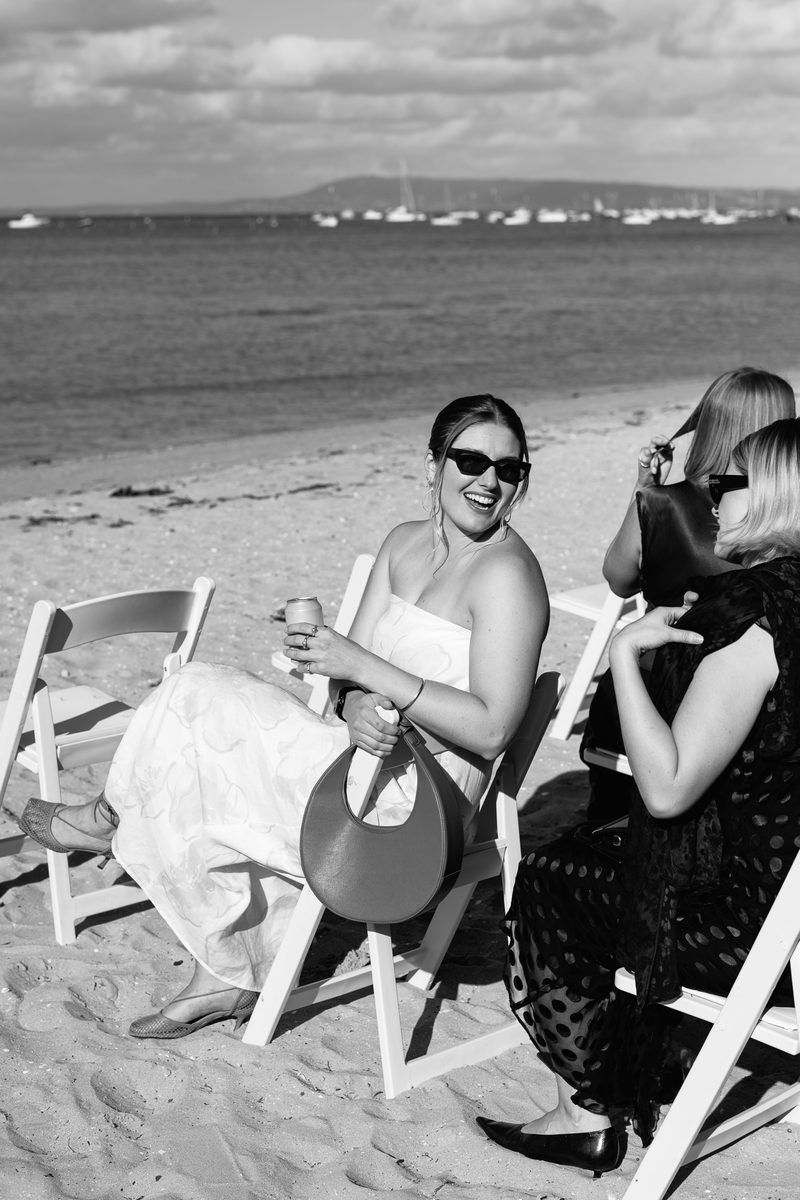
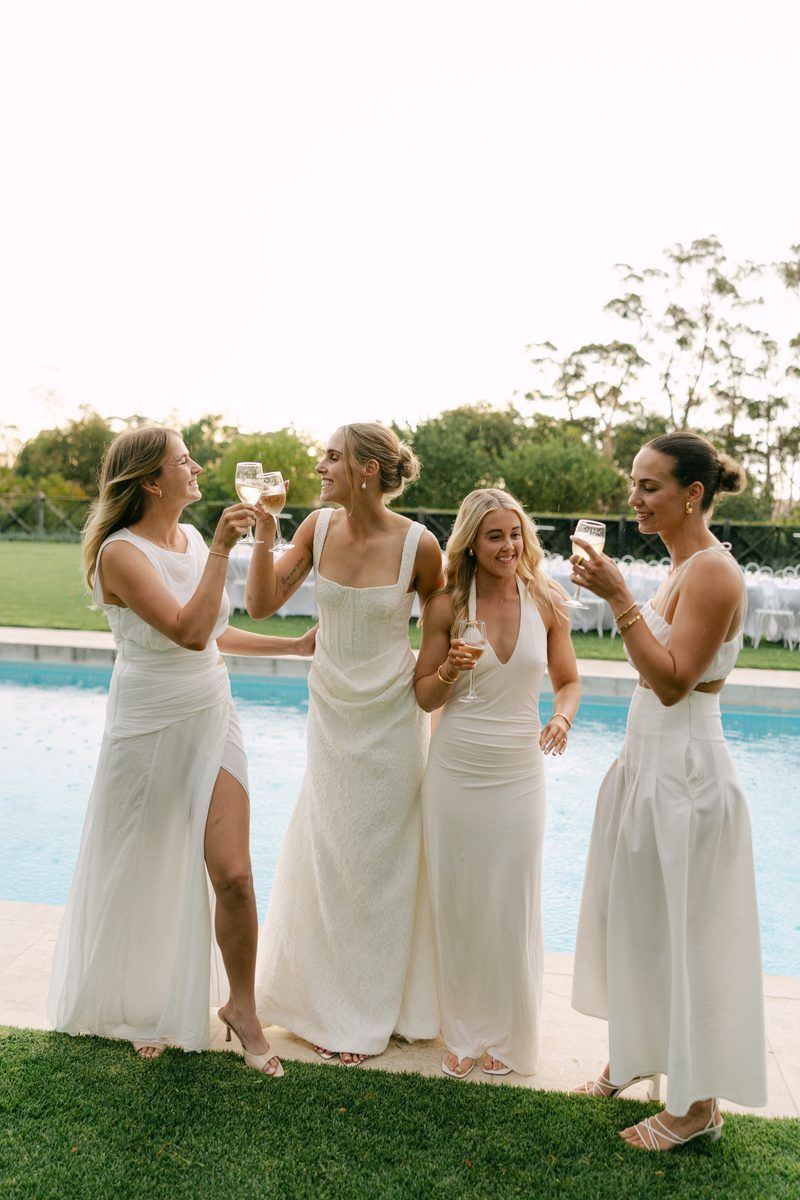
Beach formal means elegant and breezy: flowing midi or maxi dresses, linen suits, and footwear with a good working relationship with sand. The formality lives in the cut and the fabric, so choose pieces that move beautifully and still look considered when dinner is served.
Dresses and separates. Silk, chiffon and linen in midi or ankle lengths, a slip dress with a light wrap, a column with a slit for striding across the sand. Flat sandals or espadrilles for the ceremony, and a second pair tucked in your bag for the reception.
Suits and tailoring. A linen or cotton suit in sand, ecru, pale blue or olive, an open collar, and loafers with no-show socks. Roll the trousers once if the vows are on the sand itself. (Twice if the tide is coming in.)
The coastal Victoria clause. Bellarine, Mornington Peninsula, Phillip Island and Great Ocean Road weddings come with wind and a temperature drop the moment the sun sets. Bring a wrap, a tailored jacket or a fine knit, and choose a hairstyle that can forgive a sea breeze.
What to wear to a winery or country wedding
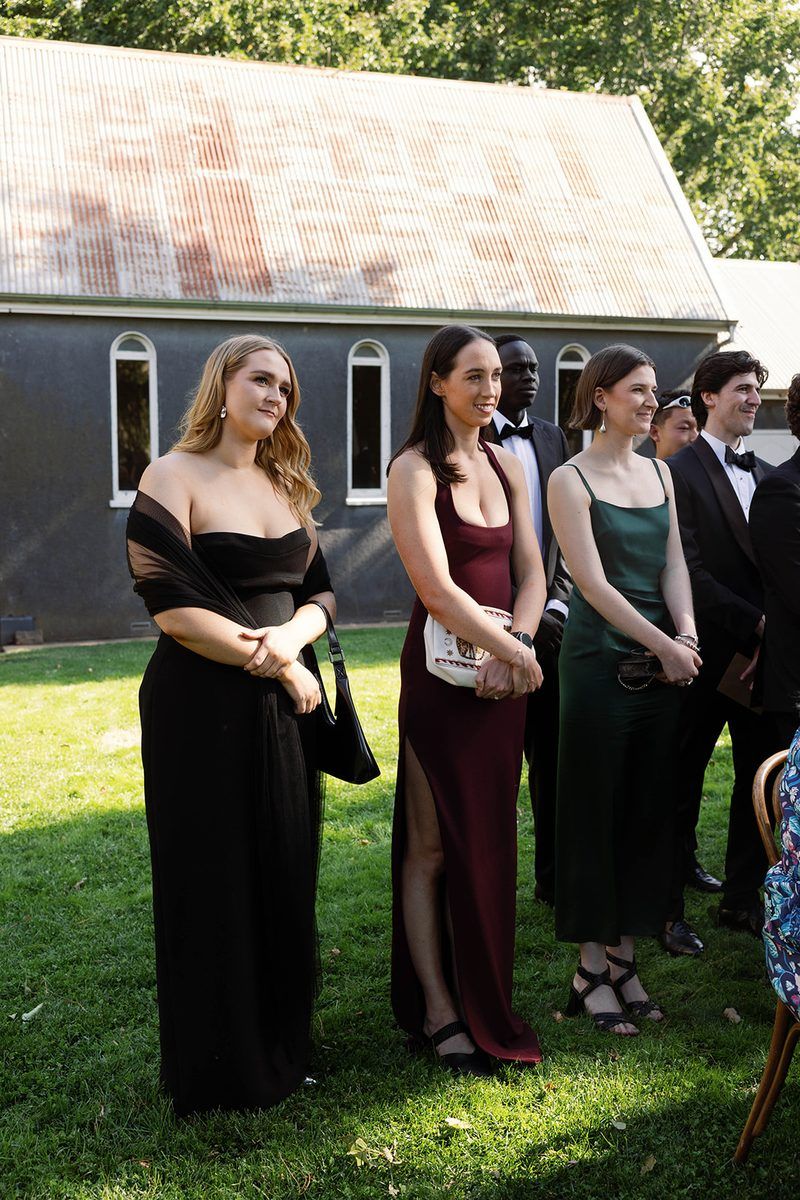
Winery and country weddings call for polished layers and practical shoes: midi dresses, linen or wool-blend suits, and something warm for when the sun slips behind the vines. Expect cocktail or smart casual, and let the setting do a lot of the styling for you.
Dresses and separates. Midi and maxi lengths in colours that look good against a row of vines: terracotta, olive, rust, chocolate, butter yellow, deep burgundy in autumn. A fine knit or tailored jacket over the shoulders handles the evening chill in the Yarra Valley, Macedon Ranges and Mornington Peninsula, which tends to arrive right on cue at golden hour.
Suits and tailoring. Linen and cotton in summer; wool blends and the odd tweed jacket when the weather cools. Earthy tones, a knit tie, brown suede loafers or polished boots.
Underfoot. Gravel paths, cellar door steps and lawns with a gentle slope (and the occasional sprinkler head). Block heels, wedges, flat boots in winter, and rubber-gripped soles for the walk back from the ceremony site.
If the invitation says rustic or wine country chic, read it as relaxed tailoring in natural fabrics, finished with good accessories.
What to wear to a destination or tropical wedding
Tropical formal means formal pieces in fabrics built for heat: lightweight gowns and midis, linen or tropical-weight suits, and a respectful eye on local custom. The couple’s dress code sets the formality. The climate chooses the fabric.
Dresses and separates. Silk, crepe de chine, chiffon and linen; midi and maxi lengths that let the air move; bright colour and big florals that sing against blue water. Pack a wrap or pashmina for air-conditioned dinners and for covering up at the ceremony.
Suits and tailoring. An unlined or half-lined suit in linen or tropical-weight wool, cotton-linen shirts, a slim leather belt, and loafers with a rubber sole. A black wool suit at 30 degrees makes for a very long afternoon.
Dressing for a Bali wedding
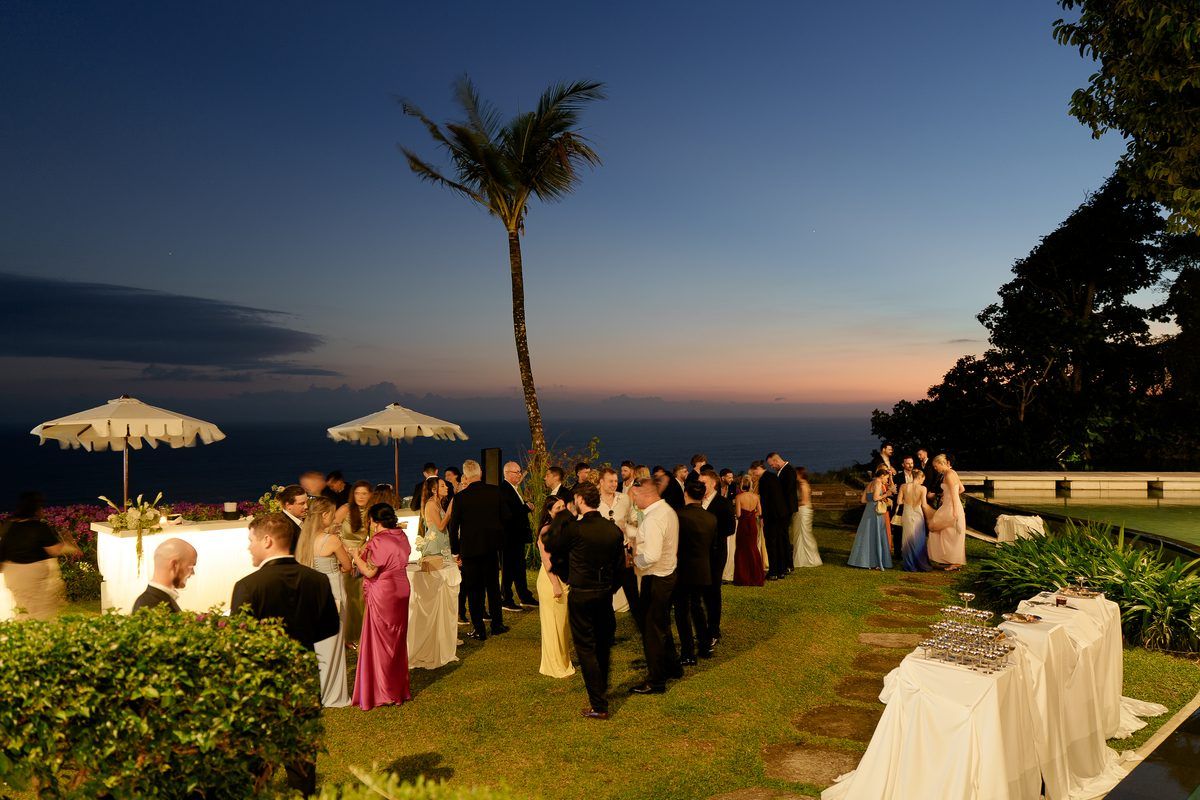
Bali weddings range from barefoot beach parties to polished clifftop and villa celebrations, and lightweight suiting is more common than strict black tie. Many ceremonies begin mid-afternoon and run late into the night, so plan for around 30°C at the vows and a warm, humid evening of dancing.
If the day includes a Balinese Hindu blessing or a temple-style ceremony, cover your shoulders and expect to wear a sarong and sash (they’re often provided). Shoes that slip off easily are your friend, and a collared, long-sleeved shirt in a light fabric is a respectful choice for anyone in tailoring.
How to read a themed wedding dress code
A themed dress code is a mood board with a formality level hiding underneath. Find the formality first, then layer the theme on top.
Recent invitations and wedding websites have asked for disco glam cocktail, formal garden party with an Italian accent, summer cocktail, festival formal, and black formal attire with every guest in black. Each one names a formality (cocktail, formal, black tie) and a mood. Dress to the formality, and let the mood guide one or two choices.
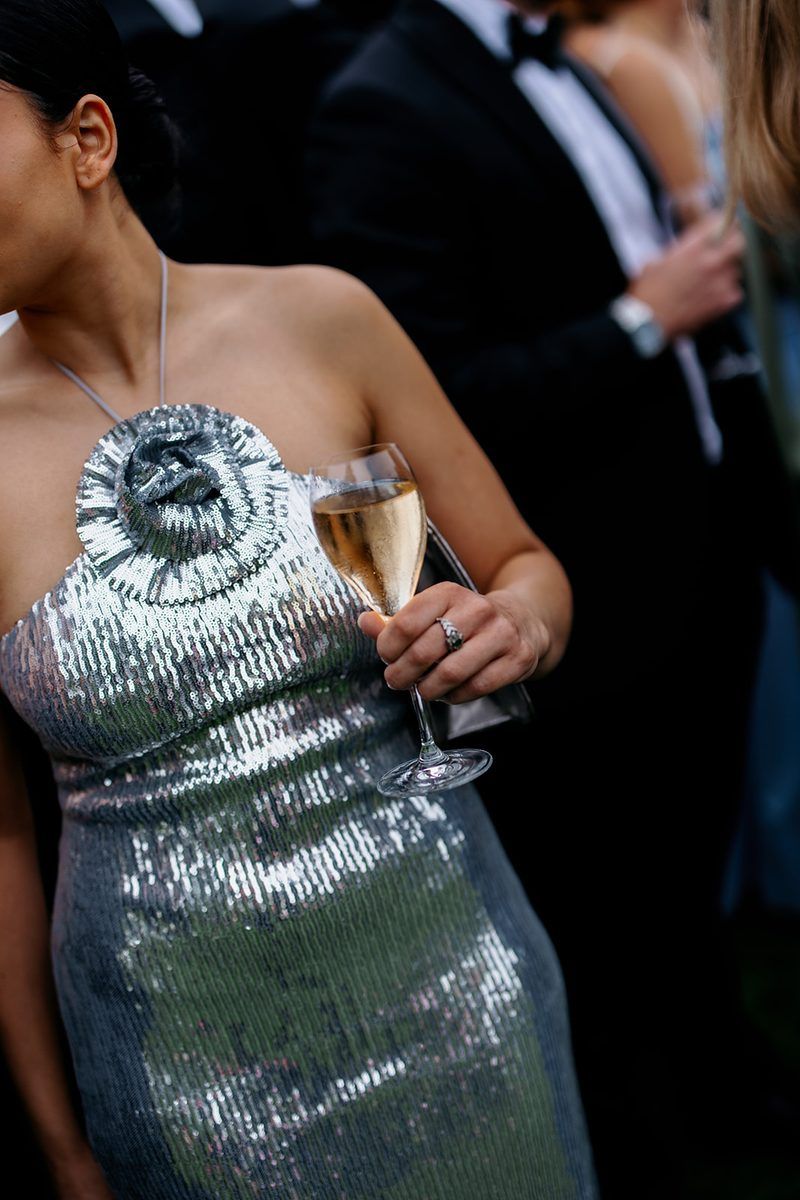
Treat the theme as seasoning. Disco glam: one sequinned or metallic piece. Italian summer: a linen suit, a citrus print, gold sandals and an Aperol in hand. All black: your best black, with texture doing the talking. Couples who choose a theme usually share a Pinterest board or a handful of reference images on their wedding website. That board is your brief, so study it like an exam paper.
Colour palette dress codes
More couples are sharing a colour palette with their guests: earthy tones, jewel tones, pastels, or a handful of named shades. Done well, it gives the photos a gorgeous cohesion. It also divides opinion, and colour requests have become a regular hot topic in online wedding forums (the comment sections can get spirited).
As a guest, wear within the palette if you own something that fits. If you don’t, choose a neutral that sits gracefully beside it. A palette is generally an invitation to play along, and most couples will simply be delighted you came.
A sweet variation doing the rounds: couples asking guests to wear blue, so the whole room becomes their something blue.
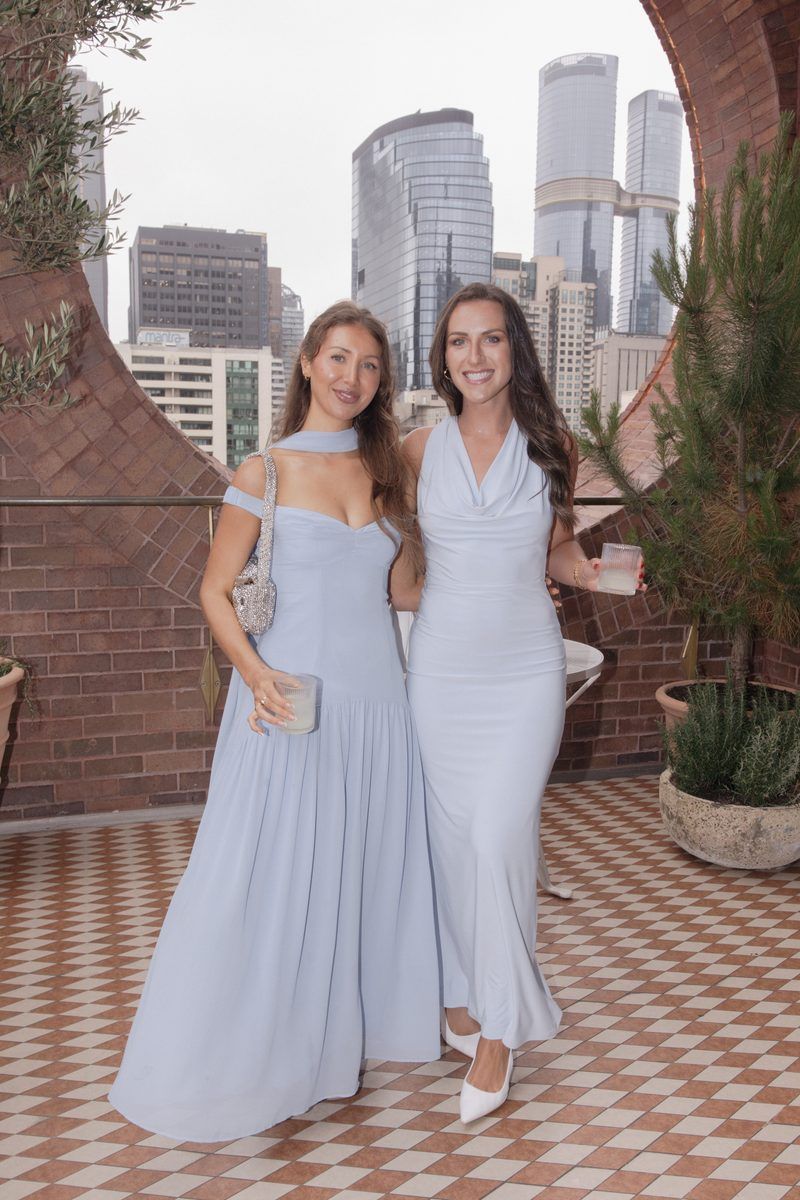
What to wear to a wedding with no dress code
No dress code on the invitation? Default to cocktail: a midi dress or polished separates, or a suit with the tie optional. Then adjust for the venue and the clock.
A Saturday night reception in a city hotel asks for more polish than a Sunday afternoon in someone’s backyard. A 4pm ceremony with a reception that runs to midnight belongs to the evening, so dress for the later hours and bring a layer for the earlier ones. And check the wedding website. Couples who leave the line off the invitation often explain themselves there.
“Come as you are”
The couple wants you comfortable and present. Read it as your best smart casual: what you’d wear to a milestone birthday dinner at a restaurant you love. It’s a warm invitation, so meet it with a little effort (and possibly an iron).
Can you wear white, black or red to a wedding?
White, ivory and anything that photographs as white belongs to the couple, unless they invite you to wear it. Black is welcome at most weddings now. Red depends on the couple’s culture.
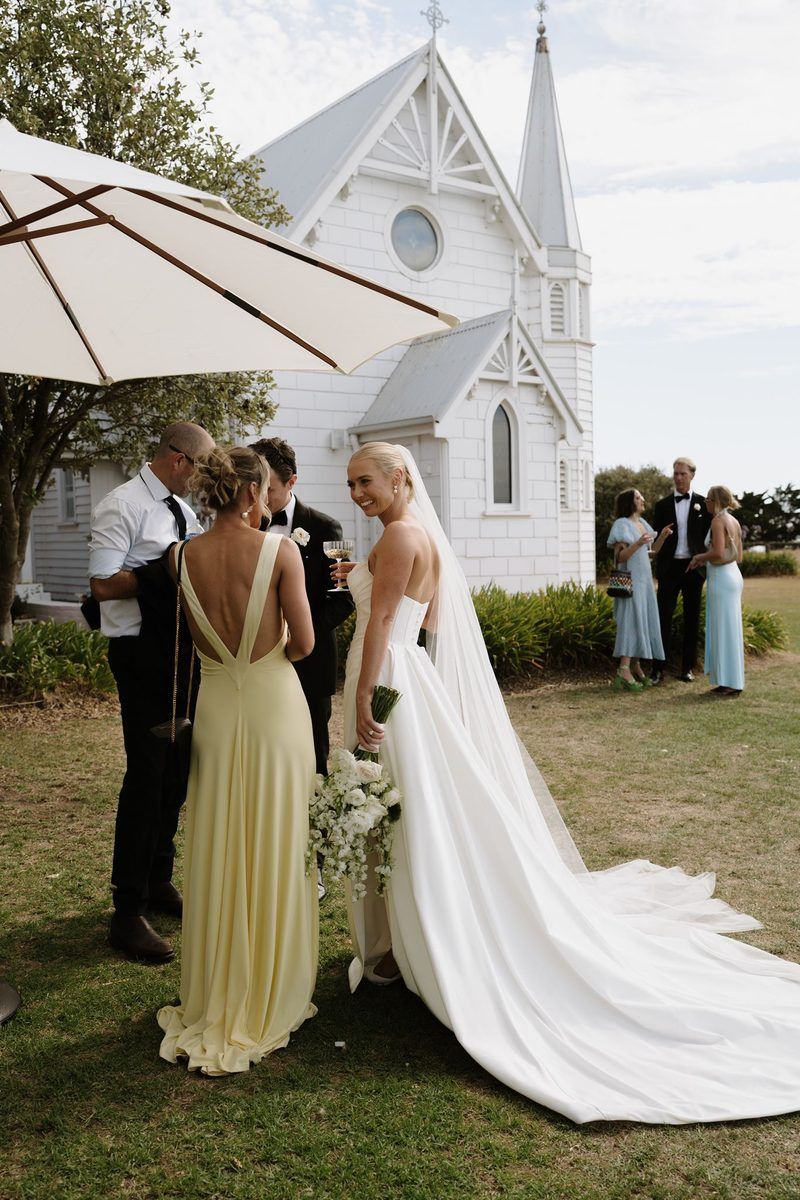
White. The white family is bigger than you’d think: ivory, cream, champagne, pale silver and the palest pastels, which can turn white under a camera flash. A white-ground floral counts too. The exception is an all-white dress code, in which case go right ahead and enjoy it.
Black. Once kept for evenings and funerals, black is now a chic choice for most weddings, and some couples ask for it outright. If they’ve asked for colour, follow their lead.
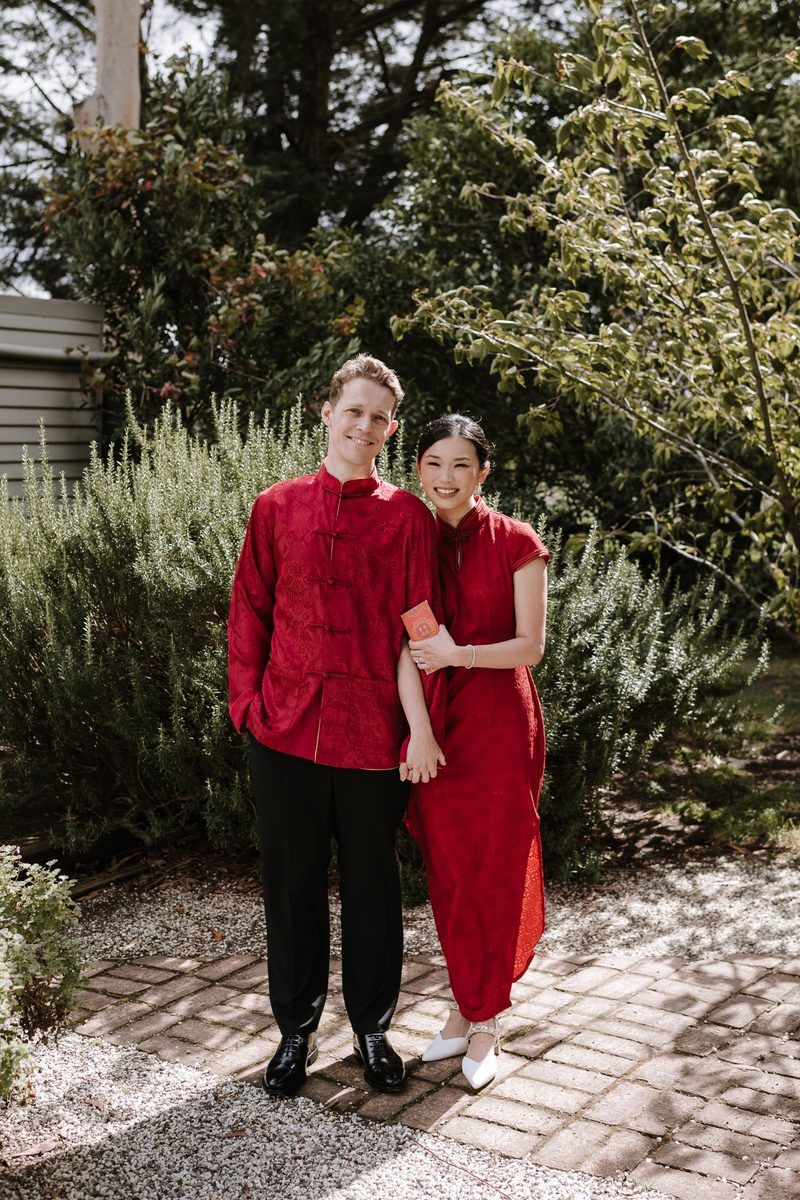
Red. Red is the bridal colour at many Chinese weddings and often at Indian weddings, so choose another jewel tone for those celebrations.
The wedding party’s colours. If you know what the bridesmaids or groomsmen are wearing, pick a shade a step away. Being mistaken for bridesmaid number five makes for a confusing group photo.
Cultural and religious weddings
Australian weddings draw on many traditions, and the couple is your best guide. A few starting points:
- Chinese weddings: red belongs to the bride, and all-white or all-black outfits can carry associations with mourning. Soft colours and pastels are a gracious choice.
- Indian and Hindu weddings: white is traditionally associated with mourning and red is often the bride’s colour. Rich, bright colour is warmly welcomed, and many hosts love seeing guests in a sari or lehenga.
- Sikh ceremonies: all guests cover their heads in the gurdwara, so carry a scarf.
- Churches, synagogues and mosques: covered shoulders, often knees, and sometimes a head covering for the ceremony. A shawl or light jacket solves it, and comes off for the reception.
When in doubt, ask. Most couples would much rather answer a quick message than watch a guest feel out of place.
Dressing for the season, the venue and Australian weather
The dress code sets the formality. The season, the venue and the forecast decide the fabric, the shoes, and the layer you’ll be quietly grateful for at 9pm.
- Spring (September to November). A busy stretch of the wedding calendar, and Melbourne’s famous four seasons in a day. Layer something elegant over your shoulders and check the forecast twice. Spring is also racing season, so keep the fascinator for Flemington unless the couple asks for one.
- Summer (December to February). Linen, cotton, silk and unlined tailoring. Lighter colours, sunscreen applied before you dress (ask anyone who’s met a silk collar with SPF 50), and a fan in your bag for an outdoor ceremony.
- Autumn (March to May). The richest season for colour: burgundy, chocolate, plum, olive and gold, in structured midi lengths.
- Winter (June to August). Velvet, long sleeves, wool suiting, and a coat that looks good in photos, because it will be in some of them.
- Lawns and gravel. Block heels, wedges and heel protectors on grass; rubber grip on gravel and stone.
- Time of day. A 3pm ceremony and a 7pm reception ask for different moods. Dress for the evening and soften the look for the afternoon.
- The dance floor. Break in your shoes the week before and pack foldable flats for the last hour. Your 1am self will thank you.
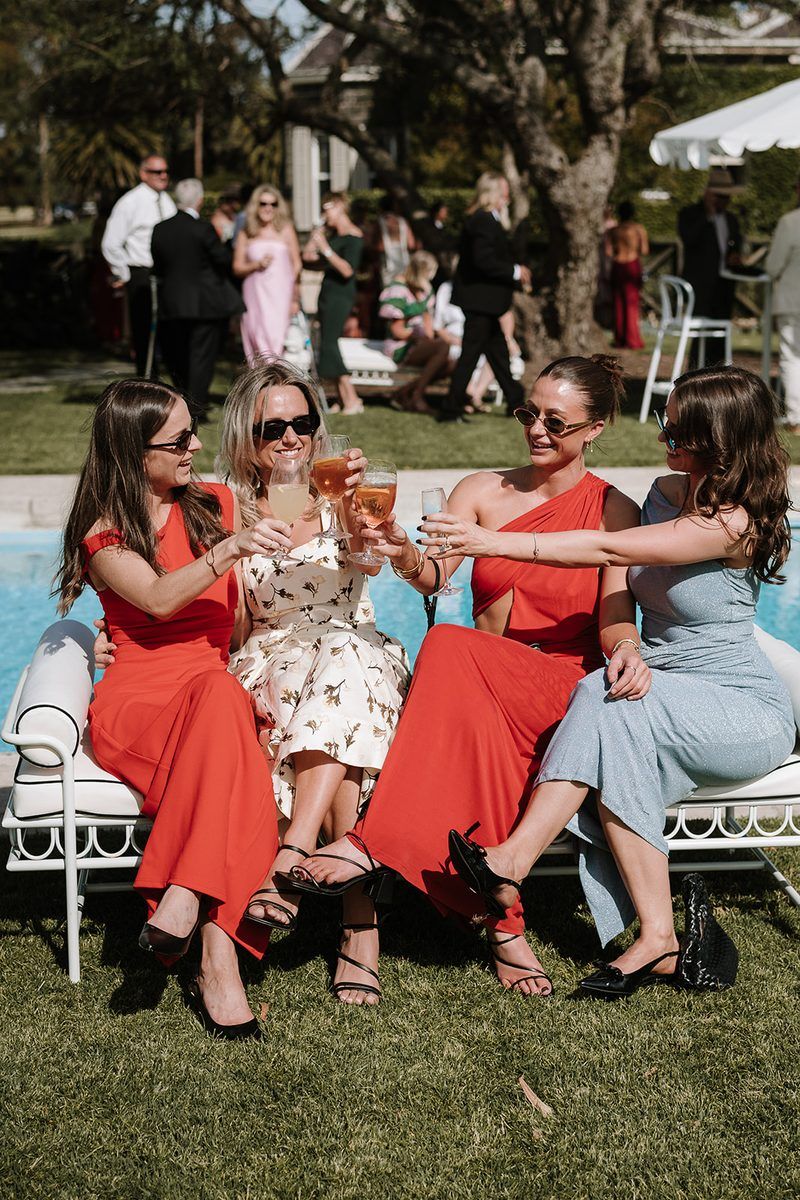
The current edit: what wedding guests are wearing for spring and summer 2026–27
Guests are trading the safe little black dress for colour, texture and pieces they’ll happily wear again. Here’s what’s landing at weddings this season.
- Black tie, back in fashion. Couples are choosing glamour again, so expect more floor-length, more candlelight and more dinner suits on your calendar.
- Saturated solid colour. Cobalt, fuchsia, emerald and butter yellow. Stylists like a strong solid because it restyles so easily for the next invitation.
- Butter yellow and icy pink. The two softer shades carrying over from the northern summer, both gorgeous in daylight.
- Scarf necklines and capes. Dresses that arrive with a matching scarf draped at the neck or over one shoulder, high necklines and floaty capes. The dress does the accessorising, which leaves a hand free for a glass.
- Magnified florals. Oversized blooms, a single lily across a bodice, daisies wrapping a skirt. Stylists are calling time on tiny prints.
- Column, drop-waist and pleated silhouettes. Long, clean lines with a vintage note, plus jacquard for texture.
- Soft shine. Shimmer in pastels and gentle metallics for daytime; draped, architectural shapes for black tie.
- Two-piece sets and jumpsuits. Polished on the day and easy to re-wear afterwards.
- Feathers, fringe and lace trims. Movement at the hem, detail at the neckline.
- Wedges and peep toes. Two returning shoe shapes, and wedges are a gift to anyone with a garden or winery wedding on the calendar.
- Linen suiting as the default. Linen and linen-look suits now cover most codes below black tie, in sage, olive, terracotta, chambray and stone.
- Knit ties and open collars. The summer swap for a silk tie, with knit polos stepping in at smart casual weddings.
- Nostalgic accessories. Polka dots, vintage florals and heritage stripes on ties and pocket squares.
Renting and re-wearing. Designer rental makes good sense for a one-off formal wedding, and wearing the same outfit to several weddings is entirely acceptable (your friends have their own outfits to think about). Wear one trend well and let the dress code do the rest.
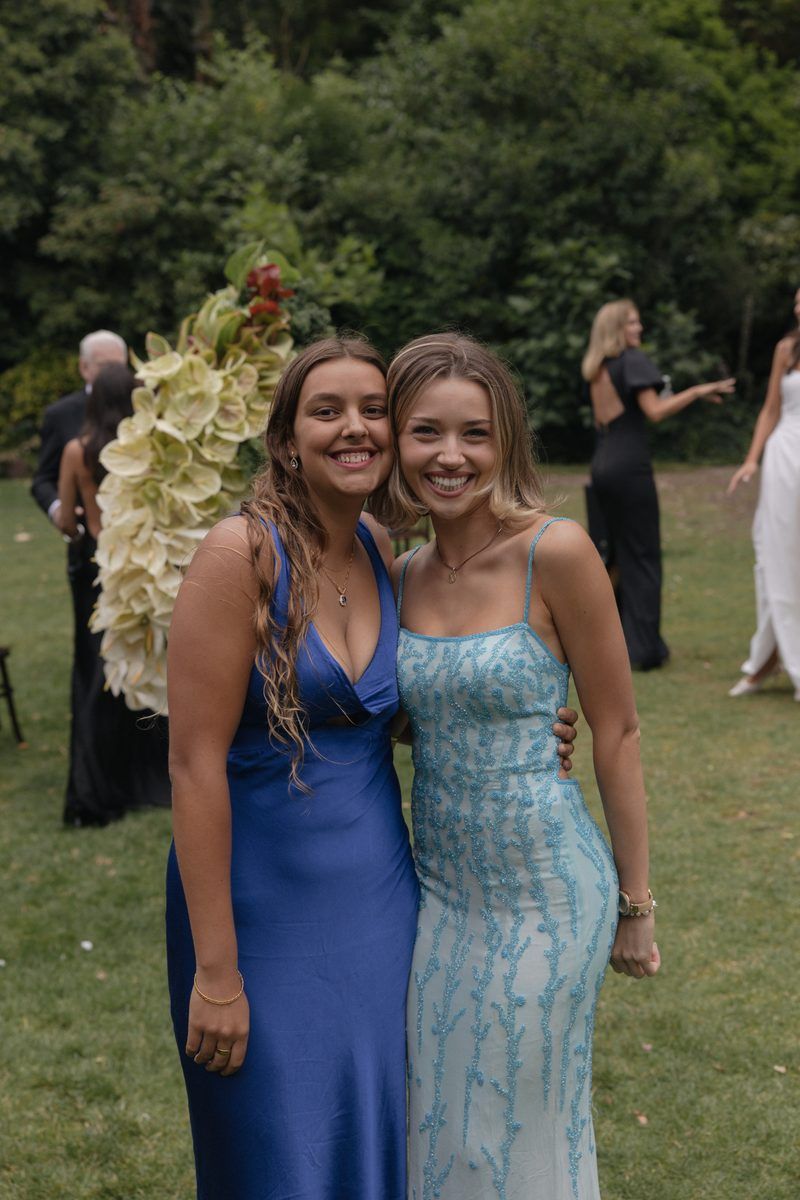
For couples: how to choose and word your wedding dress code
Choose the dress code that matches your venue and the hour of your reception, then give guests one clear line on the invitation and a sentence or two of context on your website. Your guests want to get this right for you. Make it easy.
- Start with the venue and the clock. An evening reception in a ballroom, city hotel or marquee suits black tie or formal. An afternoon at a winery suits cocktail or garden party. A beach suits beach formal. Dreaming of black tie with a 2pm garden ceremony? Push the timings so the reception begins after six, or write “formal” and enjoy a room full of gowns anyway.
- Lead with a standard code, then add your flavour. “Cocktail, with sparkle” gives guests a formality to work from and a mood to play with. A brand-new phrase on its own sends everyone to the group chat.
- Keep the invitation short and the website generous. One line on the stationery. On the website: fabrics and shoes that suit the setting, a Pinterest board or a few reference images, and any colours you’re saving for the wedding party.
- Share the practical details. Grass, gravel or sand underfoot, how cool it gets after sunset, modesty for a religious ceremony, and whether jackets can come off for dancing. (They will come off for dancing. You may as well bless it.)
- Frame a palette as an invitation. Offer a broad range of shades, welcome neutrals, and expect a few elegant black dresses. Your guests are already spending on travel and a gift, and a code that works with clothes they own is a generous one.
- Give each event its own code. For a wedding weekend, welcome drinks might be smart casual, the wedding black tie and the recovery lunch something involving sunglasses. Spell out each one.
- Settle it early and keep it steady. Lock the dress code in by the time invitations go out. Guests shop months ahead, and one widely shared story saw a couple change their colour rules the day before the wedding, catching out around 30 of their 100 guests. That group photo was a tense one.
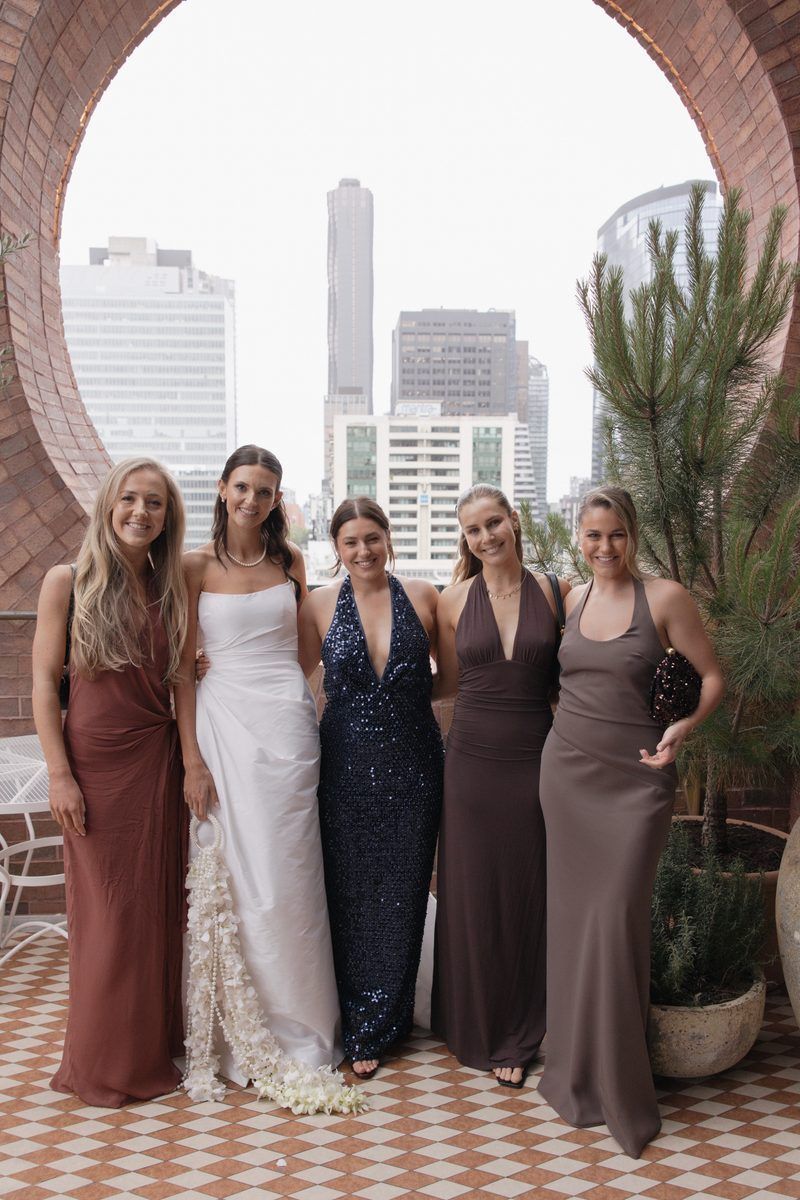
Dress code wording examples
| Dress code | On the invitation | On your wedding website |
| Black tie | Black tie | Floor-length gowns and dinner suits. Dinner is on the terrace from 7pm, so bring a wrap for later. |
| Black tie optional | Black tie optional | Dinner suits welcome, dark suits and ties equally so. Gowns or elegant midis. |
| Formal (daytime) | Formal attire | Suits and ties, gowns or polished midis. The ceremony is on the lawn at 3pm, so light fabrics and block heels are your friends. |
| Cocktail | Cocktail attire | Midi dresses, jumpsuits and suits, tie optional. Dance floor guaranteed. |
| Garden party | Garden party attire | Florals, pastels and light suits. Hats welcome for the afternoon sun. |
| Colour | Cocktail, in colour | Wear your brightest. White is spoken for. |
| Themed | Disco glam cocktail | Cocktail attire with sparkle: sequins, metallics, a statement earring. Dancing shoes essential. |
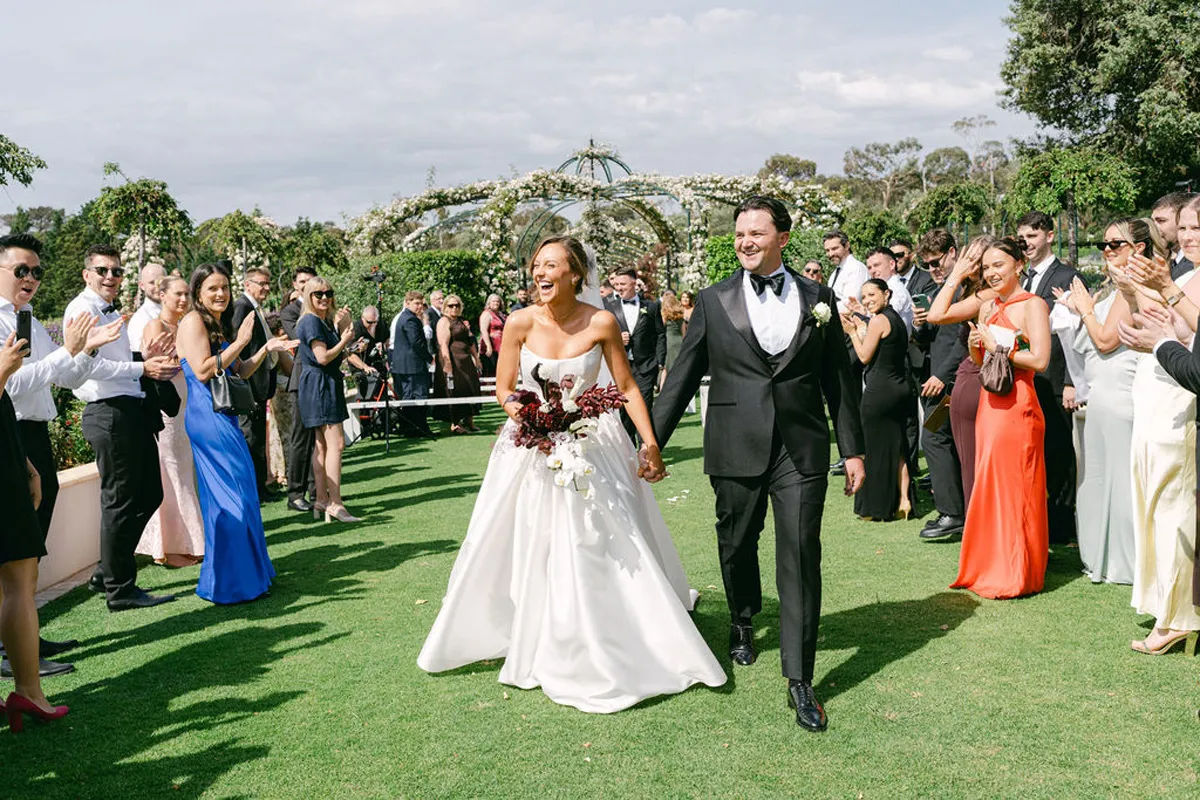
Wedding dress codes FAQs:
White tie, black tie, black tie optional and formal, lounge suit, cocktail, smart casual, then casual. Creative black tie sits beside black tie, and garden party, beach formal and themed codes sit at whatever formality the couple names.
Knee to midi-length dresses, jumpsuits and dressy separates, or a suit with the tie optional. Midi lengths and a well-cut suit in navy, grey or a lighter summer shade suit most cocktail weddings.
Outdoors, yes. Black tie is traditionally evening wear, worn after 6pm or once it’s dark, so the time matters more than the setting. Modern etiquette accepts an earlier ceremony when the reception starts after six. For a daytime wedding, “formal” is the more accurate dress code.
Black tie asks for dinner suits and floor-length gowns. Black tie optional welcomes dinner suits and treats a dark suit and tie as equally correct, with floor-length or elegant midi dresses.
Black tie formality with one personal flourish, such as a velvet dinner jacket, a colourful gown, feathers or a statement accessory.
Yes. Black is a chic, widely accepted choice for most weddings. Follow the couple’s lead if they’ve asked for colour, and check customs for Chinese and Indian weddings.
Default to cocktail: a midi dress or polished separates, or a suit with the tie optional. Dress up for an evening or city venue and soften the look for a daytime garden or backyard.
Block heels, wedges and dressy flats for lawns or gravel; flat sandals or espadrilles for sand, with a second pair for the reception.
Planning your own outfits too? Our Groom Dress Code Guide covers what the man may consider, and Style Inspiration is your place to find gown and accessories inspiration.